مسابقات انتخابی منطقه 1 کشور
مسابقات منطقه ۱ هم تمام شد و من با ۶ امتیاز از ۹ بازی هر چند انتخاب نشدم اما از عملکرد ریتینگ خود راضی هستم و در لیست ریتینگ بعدی کلی افزایش ریتینگ خواهم داشت.
خلاصه از امروز آپم و با مطالب جدید در خدمت شما هستم.
مسابقات منطقه ۱ هم تمام شد و من با ۶ امتیاز از ۹ بازی هر چند انتخاب نشدم اما از عملکرد ریتینگ خود راضی هستم و در لیست ریتینگ بعدی کلی افزایش ریتینگ خواهم داشت.
خلاصه از امروز آپم و با مطالب جدید در خدمت شما هستم.
من تا هفته دیگه آپ نمی کنم چون باید در مسابقات جشنواره کشوری بازی کنم
حتما نظرات و کامنتهای خود را بنویسید به امید خدا در اولین فرصت ممکن آپ می کنم
شاد باشید و سربلند در پناه پروردگار
شگفتيهاي شطرنج
درباره ارقام نجومي كه گاهي در ذهن هم نمي گنجد بسيار شنيده ايم. آمار وارقامي كه به آن اشاره مي كنيم بيانگر گوشه اي از عظمت جهان شطرنج است.
بنا به محاسبات كاستر و نيومن وتاييد توني بلاك برن،مجموع كلماتي كه از زبان سخن گفتن بشر تا كنون بر زبان ها جاري شده،بال16^ 10 (يك وبه دنبال آن 16صفر). تعداد كلماتي كه در تمام نسخه هاي كتاب انجيل از اولين چاپ آن تا به حال به كار گرفته شده است،اندكي بيش از اين است.(برطبق محاسبات جفري آرچر) وبيش از اينها شمار ثانيه هايي است كه از بدو آفرينش عالم پشت سر گذاشته ايم18 ^ 10 وافزونتر از آن تعداد سنگريزه هاي ساحل بلاك پول است 20^ 10 (بر اساسبروشورهاي منتشره)وتمام اينها در مقايسه با اجزاءاتم هاي(نوترون،الكترون و…)موجود در كهكشانهاي شناخته شده ،هيچ به نظر مي رسد. 79^ 10
همه اينها كجا وآنچه در اطراف شطرنج دور مي زند كجا؟تمام ارقام وآمار ياد شده در مقابل تعداد وتنوع واريانت هايي كه در يك بازي شطرنج پس از 40حركت كمتر از آن پيش مي آيد به سر سوزني ناچيز مي نمايد. 115^ 10*25 يا به زبان ديگر 25و به دنبال آن 115 صفر.
· شگفت آور نيست كه شما درمقابل تئوري هاي شروع بازي با مشكل روبرو هستيد.
|
شطرنج مانند عشق و موسیقی این قدرت را دارد که شادی بخش روح انسان بشود |
The Most Important Novelty of Chess Informant 96
Sasa Velickovic
Of particular interest to our readers is the high quality game Van Wely – Radjabov, where Van Wely surprised his opponent in a well-known position by playing 13.Ne6. In similar positions, White’s knight would only jump to the e6-square after Black played h6.
Van Wely probably estimated in his home analyses that it would be better to give Radjabov the chance to go wrong, and the game continuation proved him right. With its many subtle changes, it is no wonder that this was selected among the ten best games of the previous volume. I’m sure we will soon learn if Black has better possibilities.

Van Wely 2648 – T.Radjabov 2704
Khanty-Mansiysk (m/1) 2005 — 95/405
1.d4 Nf6 2.c4 g6 3.Nc3 Bg7 4.e4 d6 5.Nf3 0-0 6.Be2 e5 7.0-0 Nc6 8.d5 Ne7 9.b4 Nh5 10.Re1 f5 11.Ng5 Nf6 12.f3 Kh8

13.Ne6!? [a novelty; 13.Be3 see 89/488] Be6 14.de6 fe4 15.fe4 Nc6 16.Nd5 Ne4 [16...Ng8 17.b5 Nd4 18.e7 Ne7 19.Bg5 Nd5 20.Bd8 Nc3 21.Qd3 Nce2 22.Re2 Ne2 23.Qe2 Rad8 24.Qe3 and White is superior] 17.Bf3 Nf6 [17...Ng5 18.Bg5 (18.b5!? Nf3 19.gf3; 18.Bg4!?) Qg5 19.e7 Ne7 20.Nc7 e4 21.Re4 Rf3 22.Na8] 18.b5 Nd5?! [18...Ne7 19.Nf6 Rf6 20.Bb7 Rb8 21.Bd5 and White is superior; 21.Be4 and White is superior] 19.bc6 Nb6 [19...e4 20.cb7 Rb8 21.cd5 ef3 22.gf3 Ba1 (22...Be5 23.Rb1 Qh4 24.Re5 de5 25.Be3 and White is winning) 23.e7 Qe8 24.ef8Q Qf8 25.Qa4 and White is winning; 19...Nc3 20.cb7 Rb8 21.Qc2 e4 22.Be4 and White is superior] 20.cb7 Rb8 21.c5! e4 [21...dc5 22.Qd8 Rfd8 23.e7 Re8 24.Bg5 h6 25.Bc6] 22.Re4 dc5 23.Qd8 Rfd8

24.Bg5! Re8 [24...Ba1 25.Bd8 Rd8 26.e7 Re8 27.Re2 and White is winning] 25.Rd1 Bd4 26.Red4 cd4 27.e7 [27.Bf6 Kg8 28.Rd4 Re6 29.Rd8 Re8 30.Re8 Re8 31.Bc6 Rb8 32.Be5 Nd7 33.Bc7 Kf7 34.Kf2! and White is winning] h6 28.Bf6 [28.Bc6 hg5 29.Be8 Nd5 30.Rd4 Ne7 31.Rd7! Re8 32.Re7 and White is winning] Kg8 29.Rd4 Kf7 30.Rd8! (and White is winning) Nd7 [30...Kf6 31.Re8 Re8 32.Bc6 Rb8 33.e8Q Re8 34.Be8] 31.Bh4 g5 32.Rd7 Ke6 33.Bg4 Kf6 34.Be1 Rb7 35.Bc3 Kg6 36.Bf3 Rb1 37.Kf2 Rc1 38.Rc7 Kf5 39.Bh5 Rc2 40.Kf3 1-0 [Van Wely]
Bareev 2675 – Sergey Karjakin 2658
Beer-Sheva 2005 — 95/328
1.d4 d5 2.c4 c6 3.Nc3 Nf6 4.e3 e6 5.Nf3 Nbd7 6.Bd3 dc4 7.Bc4 b5 8.Bd3 a6 9.e4 c5 10.e5 cd4 11.Nb5 ab5 12.ef6 gf6 13.0-0 Qb6 14.Qe2 Ba6 15.a4 Nc5 [15...ba4 16.Ra4 Nc5 17.Ba6 Na4 18.Bb5 Ke7 19.Nd4 Qd4 20.Rd1 Qa7 21.Bf4 Rd8 22.Rd8 Kd8 23.Qd3 and White is winning; 15...Rd8 16.Bd2 and White is superior; 15...Bc5 16.a5 Qb8 17.Bd2 and White is superior] 16.ab5 Bb7 17.Ra8 Ba8

18.Nd4! [a novelty; 18.Bf4 see 61/486] Qd6 19.b6! Nd3 [19...Qd4 20.Bb5 Ke7 21.Be3 Qd5 22.f3 Qe5 23.Rd1 and White is winning] 20.Qd3 Qb6 21.Be3 [21.Qc4!? Bc5 22.Be3 with initiative] Qb7 22.f3 [22.Nf3? Rg8 with attack] Be7 23.Bh6 [23.Rc1! 0-0 24.Nc6 Re8 25.Rc4 f5 26.b4 Bf6 27.b5 Bg7 28.Rc1 and White is superior] Bf8 24.Be3 Be7 25.Bh6 Bf8 26.Nf5!? Qd5! [26...ef5 27.Qf5! Qd5 (27...Qb6 28.Kh1 Qe6 29.Qb5 and White is winning; 27...Be7 28.Bg7 Rg8 29.Qh7 and White is superior) 28.Qc8 Qd8 29.Rc1 Qc8 30.Rc8 Kd7 31.Rf8 Rf8 32.Bf8 and White is superior] 27.Qd5 [27.Ng7 Kd7 with counterplay, with the idea Bc5] Bd5 28.Bf8 Rf8 29.Ne3 (and White is slightly better) Bc6 30.Rc1 Bd7 31.Rc7 Ke7 32.Rb7! [with the idea Nc4] Rc8 [32...Kd6 33.b4 and White is slightly better] 33.b3 Kd8! 34.Ng4 Ke7 35.Nf6 Kf6 36.Rd7 [with the idea Rd3] Rc3! [R 6/f] 37.Rb7 h5 38.h4 Kg6 39.b4 Rb3 40.Rb8 Rb2 41.b5 Kg7 42.b6 e5 43.b7! f5 44.Kf1 e4 45.Ke1 Kh7? [45...Rb6 equal] 46.Kd1? [46.Rf8 Rb7 47.Rf5 ef3 48.Rh5 Kg6 49.Rg5 Kf6 50.g3 and White is winning] Kg7 47.Kc1 Rb6 48.Kd2 Rb5 49.Kc3 [49.Ke3 Rb4 only move, equal] Rb6 50.Kd4 Rb5 (only move) 51.Kc4 Rb1 52.Kd5 e3 (only move) 53.Re8 Rb7 54.Re3 Rb2 55.Ke5 Rg2 56.Kf5 Rg3 57.Ra3 [better is 57.Kf4] Kh6 58.Kf4 Rh3
½-½ [Sergey Karjakin]Predojevic 2558 – E.Romanov 2479
Istanbul 2005 — 95/115
1.e4 c5 2.Nf3 e6 3.Nc3 a6 4.d4 cd4 5.Nd4 Qc7 6.Bd3 Nf6 7.Qe2 Bd6

8.Ndb5! [a novelty; 8.Nf3 see 94/117; 8.g4 see 94/118] ab5 9.Nb5 Qa5 [9...Bb4?? 10.c3 and White is winning; 9...Qb6 10.Nd6 Qd6 11.e5 Qe7 12.ef6 Qf6 13.0-0 0-0 14.c3 and White is slightly better, with the idea a4, b4 queen's side initiative] 10.Bd2 Bb4 [10...Qb6 11.e5 Be7 12.ef6 Bf6 13.0-0 0-0 14.Bb4 and White is superior] 11.Bb4 Qb4 12.c3 Qc5 [12...Qa4 13.e5 Nd5 14.Nd6 Ke7 15.Bb5 Qh4 (15...Qf4 16.g3 Qh6 17.Qc4 and White is superior) 16.g3 Qh3 17.Qc4 Nc6 (17...Qg2 18.0-0-0 Na6 19.Qh4 f6 20.c4 and White is winning) 18.Qc5 Ne5 19.Nc4 Kf6 20.Qd4 d6 21.f4 and White is superior; 12...Qa5 13.e5 Ng8 14.Nd6 Kf8 15.Nc8 Nc6 16.Nd6 Qe5 17.Qe5 Ne5 18.Be4 and White is slightly better] 13.e5

13...Ng4! [13...Nd5 14.Nd6 a) 14...Kf8 15.Qf3 a1) 15...f6 16.Qh5 Ke7 17.Qf7 Kd8 18.Qg7 Re8 19.Ne8 Ke8 20.ef6 and White is winning; a2) 15...f5 16.Bf5! ef5 17.0-0-0! Ne7 (17...g6 18.Rd5 Qc6 19.g4 Ra2 20.gf5 and White is winning; 17...Kg8 18.Qf5 Nf6 19.Qf4 h6 20.ef6 and White is winning) 18.Qh5 a21) 18...g6 19.Qh6 Kg8 20.Ne8 Kf7 (20...Qe5 21.Rhe1 and White is winning) 21.Qg7 Ke8 22.Qh8 Kf7 23.Rd6 Ra6 24.Rf6 and White is winning; a22) 18...Ng6 19.Qf5 Ke7 20.Qg5 Ke6 21.g3!! Ra2 (21...Qf2 22.Rhf1 and White is winning; 21...Rf8 22.f4 Rf4 23.gf4 Qe3 24.Kb1 Qf4 25.Qg2 and White is winning; 21...Ne5 22.Rhe1 Qd6 23.Rd6 Kd6 24.Qe5 Kc6 25.b4 d5 26.Qg7 Rd8 27.Qe7 Rd6 28.b5 Kc5 29.Qc7 and White is winning) 22.Qf5 Ke7 23.Qf7 Kd8 24.Qa2 Rf8 25.f4 and White is winning; a3) 15...Nf6 16.Qf4 Nc6 17.ef6 Ne5 18.fg7 Kg7 19.Qg3 and White is superior; b) 14...Ke7 15.Qh5! g6 (15...f6 16.Qf7 Kd8 17.Qg7 Re8 18.Ne8 Ke8 19.Bh7 and White is winning) 16.Bg6!! fg6 17.Qh4 Kf8 18.Rd1! (with the idea Rd5) Ra4 19.Qa4 Kg7 20.0-0 and White is superior] 14.Qg4?! [14.Nd6?! Kf8! (14...Ke7 15.Qg4 Qe5 16.Ne4 and White is superior) 15.Qg4 Qe5 16.Ne4 f5 17.Qg5 Nc6 18.f4 Qd5 19.Nf2 Ra2 and Black is superior; 14.f4! a) 14...Nh6 15.b4 Qc6 16.Be4 Qb6 17.Nd6 Kd8 (17...Ke7 18.a4 and White is superior; 17...Kf8 18.Nc8 Qc7 19.Nd6 Qc3 20.Kf2 Qd4 21.Kg3 Ra3 22.Bf3 and White is superior) 18.a4 with the idea a5 and White is superior; b) 14...f5 b1) 15.Nd6 Kf8 16.h3 Nh6 17.g4 Nf7 18.Nc8 Qc8 19.gf5 ef5 20.Bf5 with compensation; b2) 15.h3 Nh6 16.b4 Qb6 (16...Qc6 17.Qh5 Kf8 18.Nd6 Qc3 19.Ke2 g6 20.Qh6 Kg8 21.Ne8 and White is winning) 17.Nd6 (17.Qh5 Ke7 18.Nd6 Qe3 19.Be2 Qg3) Ke7 18.Nc4 Qc7 19.0-0 (with the idea Qh5) b5 20.Nd6 Qc3 21.Rac1 Qd4 22.Kh1 and White is superior; 19...Nf7 unclear; b3) 15.b4! Qc6 (15...Qb6 16.Nd6 Ke7 17.Bf5!) 16.h3 Nf6 (16...Nh6 17.Qh5 Kf8 18.Nd6 Qc3 19.Ke2 g6 20.Qh6 and White is winning) 17.ef6 gf6 18.Qh5 Kf8 19.0-0 and White is superior; c) 14...h5! c1) 15.h3 Ne3 16.Nd6 Ke7 17.Qf2 c11) 17...Na6 18.Ba6 Ra6 19.Ke2 Rb6 20.b3 and White is winning; c12) 17...Qb6 18.Qh4 f6 19.Qg3 g5 20.Nc8 (20.Ne4 Qb2 21.ef6 Kd8) Rc8 21.ef6 Kf7 22.Bg6!; c13) 17...Ra5! 18.b4 Qc3 19.Ke2 Nc2 20.ba5 Na1 21.Qe1 Qe1 22.Re1 Nc6 23.Ra1 Na5 24.Ke3 Nc6 25.h4 with compensation; c2) 15.b4 Qb6 16.Nd6 Ke7 17.Nc4 Qc6 18.h3 Nh6 19.0-0 with attack] Qe5 15.Kd2! [15.Kf1 0-0 16.h4 (16.Re1 Qc5 17.h4 Ra2 18.Rh3 f5!) f5 17.Qd4 Nc6 18.Qe5 Ne5 19.Be2 and White is slightly better; 15.Qe2 Qe2 16.Ke2 Ke7 17.a4 (with the idea a5, b4) Nc6 18.b4 b6! 19.f4 Ba6 20.Kd2 and White is slightly better] 0-0 16.Qh4 [16.f4 Qf6! and White is slightly better] g6 [16...h6 17.Rhe1 Qg5 18.Qg5 hg5 19.Nd6 and White is superior; 16...f5 17.Rhe1 Qc5 18.Qd4 Qd4 19.cd4 and White is superior] 17.f4 [better is 17.Rhe1 Qg7 18.Nd6 Nc6 19.f4 with initiative] Qg7 [17...Qd5! 18.Qg5 (18.c4? Qg2 19.Kc3 Ra2! and Black is superior; 18.g4 Ra2 19.Ra2 Qa2 and Black is superior) Qc6 (18...Qg5 19.fg5 d5 20.Rhf1 Nc6 21.a3 Bd7 22.Rf6 and White is slightly better) 19.Nd4 Qb6 20.Kc2 Nc6 21.Qf6 d6 22.Rhe1 and White is slightly better] 18.g4 (with attack) Ra4 [18...d5?! 19.f5! g5 20.Qh5 Nd7 (20...e5 21.f6 and White is winning) 21.h4 ef5 22.hg5 and White is superior] 19.Rhf1 Nc6 [19...Rf4? 20.Rf4 g5 21.Qh7 and White is winning] 20.b3 time [better is 20.Nd6 e5 21.f5 g5 22.f6 gh4 23.fg7 Kg7 24.Be4 Ne7 25.c4 and White is superior] Ra5 21.a4 [21.b4 Ra4 22.Nd6 Ra3! with counterplay, weak point c3; 21.Nd6 Rd5!] f6! [21...d5 22.f5 g5 (22...ef5 23.gf5 g5 24.f6 gh4 25.fg7 Kg7 26.b4 Ra8 27.Nc7 Rb8 28.Nd5 and White is superior) 23.Qg3 e5 (23...f6 24.fe6 Be6 25.Rae1 Ne5 26.h3 with the idea Nd4) 24.f6 Qh6 25.b4 Ra8 26.Nc7 Be6 27.Na8 and White is superior] 22.Rae1 d5 23.g5! [23.Qg3? (with the idea g5) e5!; 23.f5 g5 24.Qg3 e5 and Black is superior] Bd7 [23...fg5 24.fg5 e5 25.Qh6! (25.Rf8 Qf8 26.Rf1 Qe7) Qh6 26.gh6 Be6 27.Nd6 Ra7 28.Bb5 Rf1 29.Rf1 and White is slightly better] 24.Qg3 Nd8?! [24...fg5 25.fg5 (25.Qg5 d4 26.c4 Nb4) e5 26.Nd6!? with initiative with the idea 26...Raa8 27.Nb7 Be6 28.Nc5 Qe7 29.b4, with the idea 26...Qe7 27.Rf8 Qf8 28.Re5! Ne5 29.Qe5 Bc6 (29...Qf3 30.Qe7 Qf4 31.Kc2 Qh2 32.Kb1 Qg1 33.Kb2 Qf2 34.Bc2 Bh3 35.Qd8 Qf8 36.Qa5 Qd6 37.Qa8 and White is winning) 30.Ne4! and White is superior; RR 30.Bf5! and White is winning] 25.Nd4 Ra8 26.h4 (and White is superior) Rc8 27.h5 f5 [27...gh5 28.Rh1 Be8 (28...fg5 29.Rh5 h6 30.fg5 Nf7 31.g6 Ng5 32.Reh1 e5 33.Rh6 ed4 34.Qg5 dc3 35.Kc1 and White is winning) 29.Ne6 Ne6 30.Re6 fg5 31.Qg5 Qg5 (31...Rf4 32.Qf4 Qg2 33.Re2 Qh1 34.Qg5 and White is winning; 31...Bg6 32.Bg6 and White is winning) 32.fg5 Rf2 33.Re2 Rf4 34.Ke3 and White is superior] 28.Qe3 Re8 29.Qe5 Qe5 30.Re5 Nf7 [30...Nc6 31.Re3 gh5 32.Rh1 and White is superior] 31.Re3 e5 [31...Nd6 32.hg6 hg6 33.Rh1 Kg7 34.Reh3 Rh8 35.Rh8 Rh8 36.Rh8 Kh8 37.Nf3 and White is superior; 31...gh5 32.Rh3 e5 33.fe5 and White is superior] 32.hg6 hg6 33.fe5 Re5 [33...Ne5 34.Rfe1 Nf7 35.Re8 Re8 36.Re8 Be8 37.Nf3 Bc6 38.Ke3 and White is superior, with the idea 38...d4 39.Nd4 Ng5 40.Nc6 bc6 41.a5 Ne6 42.a6 Nc7 43.a7 Kf7 44.Ba6 Ke6 45.Bb7 Kd6 46.a8Q Na8 47.Ba8 Kc7 48.Kf4 and White is winning; 33...Ng5 34.Rg3 and White is winning] 34.Re5 Ne5 35.Nf3! Nf7 [35...Nd3 36.Kd3 and White is superior; 35...Nf3 36.Rf3 Kf7 37.Rh3 Kg7 38.Rh4 and White is superior] 36.Re1 Re8 [36...Bc6 37.Re6 Kg7 38.Nh4 Nh8 39.Re7 and White is winning] 37.Re8 Be8 [NB 9/c] 38.Ke3 Kf8 39.Kd4 Ke7 40.Kc5! Nd6 41.a5 Kd7 [41...Ne4 42.Kb6 Kd6 (42...Kd7 43.Bb5 and White is winning; 42...Kd8 43.Kb7 Nc5 44.Kb6! Nd3 45.a6 and White is winning) 43.b4 (43.Be4 de4 44.Nd4 f4 45.Kb7 f3 46.a6 f2 47.a7 f1Q 48.a8Q Bc6! 49.Nc6 Qb5 50.Ka7 Qc5 equal) Bc6 44.Nd4 and White is winning] 42.Kd5 [42.Bb5! Nb5 43.Kb5 Kc7 (43...Kd6 44.Kb6 Bc6 45.Nd4 with the idea b4-b5 and White is winning) 44.Kc5 f4 45.Ne5 and White is winning] Bf7 43.Ke5 Bb3 44.Kf6 Ne4 45.Kg6 [45.Be4? fe4 46.Nd4 Bd1! (46...e3?? 47.Nb3 and White is winning; 46...Bc4 47.Nc2 and White is winning) 47.Kg6 e3 a) 48.Kh7 e2 49.Nf3 Kc6 50.g6 Kb5 51.g7 Bb3 52.g8Q (52.Nd4 Ka4 53.Nb3?? e1Q 54.g8Q Qh1 55.Kg7 Qg2 56.Kf8 Qg8 57.Kg8 Kb3 58.Kf7 Kc3 59.Ke6 Kb4 60.Kd5 Ka5 and Black is winning; 53.Ne2 equal) Bg8 53.Kg8 Ka5 54.Kf7 Kb5 55.Ke6 Kc4 56.Ke5 Kc3 57.Ke4 Kc2 58.Ke3 Kd1 59.Kd3 equal; b) 48.Kf5 e2 49.Nf3 Kc6 50.g6 b1) 50...Kb5 51.g7 Bb3 52.Nd4 Ka4 53.Ne2 (53.Nb3? e1Q 54.g8Q Qc3 equal) Ka5 54.Ke4 b5 55.Kd4 Bg8 56.Nf4 Ka4 (56...b4 57.c4 b3 58.Nd3 with the idea Kc3 and White is winning) 57.Nd5 Kb3 58.Nf6 Bf7 59.g8Q Bg8 60.Ng8 b4 61.c4 Kc2 62.Nf6 b3 63.Ne4 b2 64.Nc3 and White is winning; b2) 50...Bc2! 51.Kf6 Bg6 52.Kg6 Kc5 53.Kf5 Kc4 54.Ke5 Kc3 55.Kd6 Kb4 equal; c) 48.Kf6 e2 49.Nf3 Kd6 50.g6 Kc5 51.g7 (51.Ke5 Bb3 52.Kf4 Kc4 equal) Bb3 52.Ke5 Bg8 53.Ke4 Kc4 equal] Nc3 46.Bf5 Kd6 47.Nd2! (and White is winning) Bd5 48.Kf6 Ne2 49.Ne4 Kc6 50.Ke5 Nc1 51.Nc3 [51.Bd7 Kd7 52.Kd5 Ne2 53.Kc5 Kc7 54.Nf6 and White is winning] Bf7 52.Be4 Kc7 53.Nb5 Kb8 54.Nd6 Bh5 55.Nb7 Nb3 56.Bd5 Nd2 57.Nd8 [57.Nc5 and White is winning] Ka7 58.Kf4 Bg6 59.Ke3 Nf1 60.Kd4 Ng3 61.Kc5 Ka6

62.Nc6?? [62.Kb4 and White is winning; 62.Nb7 and White is winning] Ne4 63.Be4 Be4 equal [NB 3/g2] 64.Kd6 Kb5 65.Kc7 Ka6 [65...Bc6?? 66.a6 and White is winning] 66.Kd6 Kb5 67.Ne7 Ka5 [NB 3/e] 68.Ke5 Bh7 69.Kf6 Kb6 70.Ng6 Bg8 71.Nf8 Kc7? [71...Kc6! 72.Ke7 Kd5 73.g6 Ke5 74.Nd7 Kf5 75.g7 Be6 76.Kf8 Kg6 77.Ne5 Kf6 equal] 72.Ke7 (and White is winning) Kc6 73.g6 Kd5 74.Nd7! Kd4 [74...Ke4 75.Kf6 Kf4 (75...Bb3 76.Nc5; 75...Ba2 76.Ne5 Kf4 77.Nf7 Bb1 78.g7 Bh7 79.Nd6 Bg8 80.Ke7 Kg5 81.Kf8 Bh7 82.Kf7 Bg6 83.Kg8) 76.Ne5 Bb3 77.Nf7 Bc2 78.g7 Bh7 79.Nd6 Bg8 80.Ke7 Kg5 81.Kf8 Bh7 82.Kf7 Bg6 (82...Bb1 83.g8Q) 83.Kg8 Bd3 84.Nf7 Kf6 85.Kh8] 75.Kf6! Bb3 [75...Kd5 76.Ne5 with the idea Nf7, Kg7] 76.Ne5 Bc2 77.g7 Bh7 78.Nf3 Ke3 79.Ng5 Bg8 80.Ke7 [80...Kf4 81.Kf8 Bb3 82.Nf7] 1-0 [Predojevic, Iv.Markovic]
Iv.Sokolov 2696 – Harikrishna 2673
Hoogeveen 2005 — 95/(282)
1.d4 d5 2.c4 c6 3.Nc3 Nf6 4.Nf3 dc4 5.a4 Bf5 6.Ne5 Nbd7 7.Nc4 Qc7 8.g3 e5 9.de5 Ne5 10.Bf4 Nfd7 11.Bg2 g5 12.Be5 Ne5 13.Qd4 f6 14.0-0-0

14...Rd8! [a novelty; 14...Be7 see 95/(282)] 15.Qe3 Be7 16.Rd8 Kd8 17.Ne5 Qe5 18.Qa7 Ba3 19.Rd1 Kc8 20.Qd4 Qd4 21.Rd4 Bc5 22.Rd2 Be6 with compensation
Ulibin 2536 – E.Berg 2531
Santa Cruz de La Palma 2005 — 95/(195)
1.e4 e6 2.d4 d5 3.Nd2 Nf6 4.e5 Nfd7 5.c3 c5 6.Bd3 Nc6 7.Ne2 cd4 8.cd4 f6 9.ef6 Nf6 10.Nf3 Bd6 11.0-0 Qc7 12.Bg5 0-0 13.Bh4 Nh5 14.Qc2 h6 15.Bg6 Rf3 16.gf3 Bh2 17.Kh1 Nf4 18.Ng3

18...e5! [a novelty; 18...Qb6 see 86/272] 19.Kh2 Qd6 20.Bh7 Kh8 21.de5 Ne5 with compensation.
R.Ponomariov 2704 – Bareev 2675
Khanty-Mansiysk (m/2) 2005 — 95/205
1.e4 e6 2.d4 d5 3.Nc3 Nf6 4.e5 Nfd7 5.f4 c5 6.Nf3 Nc6 7.Be3 a6 8.Qd2 b5 9.a3 Bb7 10.g3

10...Qa5! [a novelty; 10...c4; 10...g6; 10...Qb6] 11.Ra2!? [11.a4?! Be7 (11...b4 12.Ne2) 12.Bg2 Nb6 13.b3 cd4 14.Nd4 Bb4 15.Nc6 Bc6 16.Bd4 Rc8 17.0-0 Bd7 18.Rf3 (18.ab5 Bc3 19.Ra5 Bd2 20.Ra6 Bb5 21.Rb6 Bf1 22.Bf1 0-0) ba4 with counterplay; 11.Rb1 b4 12.ab4 Qb4 13.Bg2 Nb6 14.b3 Rc8 with counterplay; 11.Bg2 b4 12.Ne2 cd4 with the idea13.Ned4 ba3 14.c3 ab2 15.Qb2 Qc7 16.0-0 Bc5] Rc8 [11...g5!? 12.Bh3 (12.Ng5 cd4 13.Bd4 Nd4 14.Qd4 Bc5 15.Qd3 d4 16.b4 Bb4 17.ab4 Qb4 with initiative) gf4 (12...h5 13.Ng5 cd4 14.Bd4 Nd4 15.Qd4 Bc5 16.Qd3 d4 17.Be6 and White is winning) 13.gf4 Rg8 14.f5 (14.Rg1 Rg1 15.Bg1 Bh6 unclear, weak point Ra2) Nce5 15.de5 d4 16.fe6 fe6 17.Be6 Bf3 18.Qf2 Ne5 19.Bg8 Bh1 20.Qf5 Bg7 21.Bh6 Bh6 22.Qe5 Kf8 23.Be6 Qd8 24.Nd5 Qh4 25.Kf1 Bd5 26.Bd5 Rd8 27.Qh8 Ke7 28.Qe5 Kf8 equal; 11...Qc7 12.Bg2 Nb6 (12...b4 13.ab4 cd4 14.Nd4 Bb4 15.0-0 Nb6 16.Nc6 Qc6 17.Bd4 Nc4 18.Qf2 and White is superior) 13.b3 b4 14.Ne2 (14.ab4 cd4 15.Nd4 Bb4 16.0-0 Rc8 17.Nc6 Qc6 18.Qf2 Bc3 19.Bb6 0-0 20.Bd4 Rc7 with counterplay) c4 (14...cd4 15.Ned4 ba3 16.f5 ef5 17.0-0 Nd4 18.Nd4 g6 19.e6 Bg7 20.ef7 Kf7 21.g4 with initiative) 15.a4 Na5 16.Qd1 0-0-0 17.0-0 g6 unclear] 12.Bg2 b4 [12...Qb6 13.Ne2; 12...Nb6 13.b3 cd4 14.Nd4 Nd7 (14...Ne5 15.b4 Nbc4 16.ba5 Nd2 17.Bd2 Nc4 18.Nb1 Bc5 19.Nb3 Ba7 20.c3 0-0 21.a4 ba4 22.Ra4 and White is superior) 15.Nc6 Rc6 16.b4 Qc7 17.Ne2 Nb6 18.Bb6 Qb6 19.Nd4 Rc4 20.c3 Be7 21.Bf1 Rc7 22.Bd3 0-0 23.0-0 Rfc8 24.Rf3 f6 with counterplay] 13.ab4 Qb4 14.0-0 cd4?! [14...Nb6! 15.Qf2 (15.b3 cd4 16.Nd4 Bc5 17.Nc6 Rc6 with counterplay, weak point Nc3) Nc4 16.Ra4 Qb2! 17.Rb1 Qc3 (17...cd4 18.Rb2 de3 19.Qe1 Nb2 20.Qb1 Na4 21.Qb7 and White is winning) 18.Rb3 Qb3 19.cb3 Ne3 20.Qe3 a) 20...Nd4 21.Nd4 cd4 22.Qd2 Be7 (22...Bc5 23.Bf1 d3 24.Kg2 Be3 25.Qb4 Rb8 26.h4 with the idea 26...d2 27.Ba6 d1Q 28.Bb5 Kd8 29.Qd6 Kc8 30.Qd7#) 23.Bf1 Rc3 24.b4 0-0 25.Qd4 Rfc8 26.Qb6 with initiative; b) 20...cd4 21.Qd2 b1) 21...a5 22.f5! (22.Bf1 Bb4 23.Qd1 0-0 24.Bd3 h6 unclear) ef5 23.Qg5 with initiative; b2) 21...Be7 22.Bf1 (22.Bh3 0-0 23.f5 f6) 0-0 23.b4 (23.Ba6 Ba6 24.Ra6 Nb4 25.Ra5 Rc2 26.Qd4 Rfc8 and Black is superior) Rb8 24.Nd4 Nd4 25.Qd4 Bc6 26.Ra6 Rb4 27.Qf2 Rc8 28.Rb6 equal] 15.Nd4 Nd4 16.Bd4 Bc5 17.Rd1 Bd4 18.Qd4 Rc4 19.Qf2! [19.Qa7 a) 19...Qc5 20.Qc5 Nc5 21.Bf1 (21.Ra5 Nd7 22.Bf1 Rb4 23.Ba6 Ba6 24.Ra6 Rb2 25.Ra8 Rb8 26.Rb8 Nb8) Rb4 22.Ne2 and White is slightly better; b) 19...Ke7 20.Bf1 Qc5 21.Qc5 Rc5 22.Ba6 Ba6 23.Ra6 Rb8 with compensation] 0-0 20.Bf1 Rc7 21.Qd4 a5? [21...Qe7 22.Ba6 Ba6 23.Ra6 Rb8 24.Rd6! and White is slightly better, with the idea 24...Qe8 25.Ra1 Rc4 26.Qa7! and White is superior]

22.Qb4! ab4 23.Nb5 Rc2 24.Nd4 (and White is superior) Rcc8 [24...Rc7 25.Ra7 Ra8 26.Ra8 Ba8 27.Ra1 Bb7 28.Nb5! Rc2 29.Ra7 Bc8 30.Nd6 and White is superior] 25.Ra7 Nc5 26.Rc1 Ba8 27.Ba6! [27.Ra8 Ra8 28.Rc5 Ra2 with counterplay] Na6 28.Rc8 Rc8 29.Ra6 [weak point Ba8] g5 [R 9/i] 30.b3! [30.fg5 Bb7 31.Rb6 Rc4! 32.Nb5 Bc6 33.Nd6 Rc1 34.Kf2 d4 with counterplay, passed pawn d] gf4 31.gf4 Bb7 32.Rb6 Rc7 33.Kf2 Bc8 34.Rc6! (and White is winning) Rc6 35.Nc6 Bb7 [35...Kf8 36.Ke3 Bb7 37.Nb4 Ke7 38.Kd4 Kd7 39.Kc5 Kc7 40.Nc2 Ba6 41.Nd4 Bd3 42.b4 Kb7 (42...Bg6 43.Nb5 Kb7 44.Nd6 Kc7 45.b5 h6 46.b6 Kb8 47.h3 Bh5 48.f5 Ka8 49.fe6 fe6 50.Nb5 Kb7 51.Nd4 Bf7 52.Nc6) 43.Nc6 (43.b5) Kc7 44.Ne7 and White is winning, with the idea Ng8-f6-e8-d6, b5] 36.Nb4 d4!? 37.Nc2 d3 38.Nb4 d2 39.Ke2 Kg7 40.Kd2 Kg6 41.Ke3 Kf5 42.Nd3 Bc6 43.b4 Kg4 44.Nf2 Kf5 45.h3!? [45.Nd1 Kg4 46.Nc3 Kh3 47.b5 Ba8 48.Ne4 h5 (48...Kh2 49.Nf6 h6 50.Ng4 and White is winning) 49.Ng5 Kh2 50.Kf2 and White is winning] h5 46.h4 Ba4 47.Kf3 Bc6 48.Kg3 Ba4 49.Nd3 Bc6 50.Ne1 f6 51.Nf3 fe5 52.Ne5 Ba4 53.Nc4 Kf6 54.Kf3 Bb5 [54...Bc6 55.Ke3 Ba4 56.Nd6 e5 57.Ne4 Kf5 58.Ng3 Kg4 59.f5 and White is winning] 55.Nd6 Bc6 56.Ke3 e5 57.b5 1-0 [R.Ponomariov]
Kobese 2400 – El Gindy 2524
Lusaka 2005 — 95/(183)
1.e4 c5 2.Nf3 d6 3.d4 cd4 4.Nd4 Nf6 5.Nc3 Nc6 6.Bc4 e6 7.Be3 d5 8.ed5 ed5

9.Qe2!! [a novelty; 9.Bb5 Bd7 10.0-0 Be7 (10...Bb4) 11.Nf3 (11.Qf3; 11.Bc6; 11.Re1) Be6 12.Ng5 a6 13.Ne6 fe6 14.Bc6 bc6 15.Bd4 0-0 16.Qe2 Qd6 17.Rae1 c5] Be7! [9...dc4 10.0-0-0! Nd4 (10...Bd7 11.Nc6 bc6 12.Bc5 Be7 13.Rhe1 Ng8 14.Qc4) 11.Bd4! (11.Rd4? Qa5 12.Rd5 Qa6 and Black is winning) Be6 (11...Qe7? 12.Bf6 gf6 13.Qh5 Be6 14.Qb5 Bd7 15.Qb7 and White is winning) 12.f4 Qe7 13.Bf6 gf6 14.Rhe1 Rd8 (14...Qc5 15.g4 Bh6 16.g5 fg5 17.Qh5 and White is winning) 15.f5 Bf5 16.Qh5 Be6 (16...Rd1 17.Kd1 Be6 18.Nd5 and White is winning) 17.Qb5 Rd7 18.Nd5 Bh6 19.Kb1 Qd8 20.Nf6 Qf6 21.Qd7 Kf8 22.Qd6 a) 22...Kg8 23.Rf1 Qh4 24.Qb8 Bf8 25.Rd8 Kg7 26.Qe5 Kg6 27.Rd4 and White is winning; b) 22...Kg7 23.Rf1 Qh4 (23...Qg5 24.Rf3) 24.Qe5 Kg8 25.Rf3; c) 22...Qe7 23.Re6 fe6 24.Rf1] 10.0-0-0 0-0 11.Nf3 Be6 12.Ng5 Qa5 13.Ne6 fe6 14.Bb3 Bb4 [14...Rae8! 15.Bg5 (15.Bd2 Nd4) Kh8 16.Kb1 Nd7 17.Be7 Re7 18.f3 Nc5 unclear] 15.Nb5 a6 16.Nd4 Rae8 17.g4 with attack [El Gindy]
Sutovsky 2654 – A.Stefanova 2494
Hoogeveen 2005 — 95/259
1.e4 e5 2.Nf3 Nc6 3.Bb5 a6 4.Ba4 Nf6 5.0-0 Be7 6.Re1 b5 7.Bb3 d6 8.c3 0-0 9.h3 Na5 10.Bc2 c5 11.d4 Qc7 12.d5 Bd7 13.b3 Rfe8

14.Kh2! [a novelty; 14.Nbd2; 14.Qe2 see 95/(259)] g6 15.g4 h5 [15...c4 16.b4 Nb7 17.a4 a5 18.Be3 and White is slightly better] 16.g5 Nh7 [with the idea f6] 17.Rg1! c4 18.b4 Nb7 19.Nbd2 [19.a4!? a5 20.Be3 and White is slightly better] Qc8?! [better is 19...a5 20.Nf1 ab4 21.cb4 with attack, with the idea Ne3-f5, with the idea Ng3-h5] 20.Rg3 h4? [20...a5 21.Nf1 with attack] 21.Nh4 Bg5 22.Ndf3 Bf6 [22...Bc1? 23.Qc1 Qd8 24.Qh6 and White is winning] 23.Qg1! Qd8 24.Bh6! a5 [24...Kh8? 25.Rg6! fg6 26.Ng6 Kg8 27.Nge5 Ng5 28.Bg5 and White is winning; 24...Nf8 25.Ng5 and White is winning]

25.Rg6! fg6 26.Qg6 Kh8 27.Qf7?! time [27.Ng5! Ng5 28.Bg5 Bg5 29.Qh5! Kg7 30.Rg1 Rg8 only move 31.Rg5 Kf6 (31...Qg5 32.Qg5 Kf7 33.Qh5 Kf6 34.Bd1! ab4 35.Qh6 Ke7 36.Qh7) 32.Qh6 Kf7 33.Qh7 Kf6 34.f4! Qf8 (34...ab4 35.Nf5 Qf8 36.Rg8 Qg8 37.Qe7 Kg6 38.Qg5 Kf7 39.Nh6; 34...ef4 35.e5! de5 36.Rh5!) 35.Rg8 Qg8 36.fe5 de5 (36...Kg5 37.Qe7 Kh6 38.Qd7) 37.Qd7 and White is winning] Rg8 28.Rg1 Qe7 29.Ng6 Rg6 30.Qg6 (and White is superior) Rf8 (only move) 31.Nh4 [31.ba5!? Na5 32.Nh4 with attack] Be8 32.Qg4 ab4 33.cb4 Qf7 34.Bf8 Qf8 35.Nf5 Bg5?! time [35...Bd7! a) 36.Qh5!? Be8 (36...Nd8 37.Rg6 Bf5 38.ef5 and White is superior) 37.Qe2 Bg5 38.a4 and White is superior; b) 36.Qg6 Be8 37.Qg3 Bg5 (37...Bd7 38.Nh4 Be8 39.Kh1 Bg5 40.Nf5 Bd7 41.h4 see 37...Bg5) 38.Kh1 Bd7 39.h4 b1) 39...Bf4 40.Qg7 Qg7 41.Rg7 Nf8 (41...Bf5 42.Rb7 Bg4 43.Rb5 Bf3 44.Kg1 Nf6 45.Rb8 Kg7 46.b5 and White is winning) 42.Rf7! Kg8 43.Re7 and White is winning; b2) 39...Bf6 40.Qg6! b21) 40...Bf5 41.ef5 Nd8 (41...Bh4 42.f6! Nf6 43.Rg4! Bf2 44.Rg2 and White is winning) 42.a4 ba4 43.Ba4 and White is superior; b22) 40...Be8 41.Qg4 Bd7 42.Qh5! Be8 43.Qf3 Bd7 44.Rg6 and White is superior; b23) 40...Nd8!? b231) 41.a4 ba4 (41...Bf5 42.ef5 ba4 43.Ba4 and White is superior) 42.Nd6 Bh4 43.f4 (43.Nc4 Bf2 44.Ne5 Bg1 45.Nd7 Qf1! 46.Qe8 Kg7 47.Qe5 Kh6 48.Bd3! Qd3 49.Qf4 Kg7 50.Qe5 Kf7 51.Qh5 Kg7 52.Qe5 equal; 43.Qh5 Qd6 44.Qh4 Nf7 unclear) a3 44.f5 c3 45.Nc4 Be8 46.Ne5 Bf6 47.Qg3 Qh6 48.Kg2 Qd2 49.Kh1 Qh6 equal; b232) 41.Nd6 Be7! 42.Nf5 Bf5 43.ef5 (43.Qf5 Qf5 44.ef5 Nf6 45.Rd1 Nf7 unclear) Nf6 44.a3 Nf7 45.Re1 Bd8! and White is superior] 36.h4 Bf6 37.Nh6 Bg7 38.Nf5 Bf6 39.Rg3! Bd7 40.Ra3! (and White is winning) Nd8 [40...Bd8 41.Ra8 Nf6 42.Qg6 Bf5 43.Qf5] 41.Ra7 Bf5 42.Qf5 Nf7 43.Kg2! [43.Qg6!? Be7 44.Kg2! (44.Qe6?? Nh6! and Black is winning) Nf6 45.Rb7] Qg7 44.Kf1 Nf8 [44...Nh6 45.Qc8 Qg8 46.Qg8 Kg8 47.a4] 45.Bd1 Ng6 [45...c3 46.Qc8] 46.Qc8 Bd8 [46...Kh7 47.Bg4 (47.Qe8 Ngh8 48.Qb5) Nf4 48.Qd7] 47.Rf7 Qf7 48.Qd8 Kh7 49.Bg4 Qf4 50.Bf5 Kh6 51.Qd6 1-0 [Sutovsky]
Or.Perez 2439 – A.Colovic 2418
La Habana II 2005 — 95/(185)
1.e4 c5 2.Nf3 d6 3.d4 cd4 4.Nd4 Nf6 5.Nc3 a6 6.f3 e5 7.Nb3 Be6 8.Be3 Be7 9.Qd2 0-0 10.0-0-0 Nbd7 11.g4 Nb6 12.h4 Rc8 13.Kb1 Qc7 14.h5 Nfd7 [14...h6? see 92/237]

15.Rh2! [a novelty; 15.g5 f5! with counterplay] Nc4 16.Bc4 Qc4 17.g5 (and White is superior) f5? 18.Na5 Qc7 19.Nd5 Bd5 20.Qd5 Kh8 21.ef5 and White is winning [Motylev]
Predojevic 2558 – M.Drasko 2528
Srbija i Crna Gora 2005 — 95/191
1.e4 e6 2.d4 d5 3.e5 c5 4.c3 Nc6 5.Nf3 Bd7 6.Be2 Nge7 7.Na3 Ng6 8.h4 cd4 9.cd4 Bb4?! 10.Kf1 Ba3 [10...h6 see 90/231] 11.ba3 h6 12.Rb1 Na5

13.Bd3! [a novelty; 13.Bd2] Bc6 [13...Qc7 14.Rh3!] 14.h5 Ne7 15.Nh4 (and White is superior) Kd7 [15...0-0? 16.Bh6 (16.g4 f5 17.ef6 Rf6 18.g5 hg5 19.Bg5 Rf7 20.Ng6 and White is winning) gh6 17.Qg4 (17.Qd2 Kg7 18.Rh3 f5 19.ef6 Rf6 20.Rg3 Kf7 21.Ng6 Ng6 22.Qh6 with attack) Kh8 18.Ng6 fg6 19.hg6 Nf5 (19...Kg7 20.Rh6 Rh8 21.Qh4 and White is winning; 19...Rf2 20.Kf2 Qf8 21.Ke2 and White is winning) 20.Bf5 Rf5 21.Rh6 Kg8 22.Qh3 Kf8 23.Rh8 Ke7 24.Qh7 and White is winning; 15...Qc7! 16.Qg4 0-0-0 17.Qg7?? Bb5! 18.Bb5 Qc2 and Black is winning; 17.Rh3! and White is superior] 16.Qg4 Rg8 [16...Qf8 17.Rh3 f5 18.ef6 gf6 19.Re3 and White is superior] 17.Bh7!? [17.Rh3 and White is superior, with the idea Rf3] Rc8 18.Bg8 Qg8 19.Rh3 [19.Be3 Qh7 20.Re1 Bb5 21.Kg1 Nc4 22.Rh3 Na3 23.Rg3 and White is superior] Qh7 20.Ra1 Bb5 21.Kg1 Bd3 22.Rg3 g5 23.hg6 Ng6 24.Ng6 Bg6 25.Qh4 Rc4 26.Bh6 Nc6 27.Rd1 Ne5 28.Qf6 Nc6 29.Be3 Qh5 30.Re1 Qf5 31.Qg7 Rc2 32.Rf3 Qh5 33.Rc1 Rc1 34.Bc1 (and White is winning) Bf5 35.Bf4? [35.Be3 and White is winning] Be4! with counterplay [35...Qg6 36.Qf8 Nd4 37.Qd6 Ke8 38.Qb8 Ke7 39.Bd6 Kf6 40.Be5 and White is winning] 36.Rg3 Qd1 37.Kh2 Qh5 38.Rh3 Qf5? [38...Qg6! 39.Qg6 Bg6 40.Be3 (40.Be5 Ke7 41.Rf3 Bf5 with counterplay, with the idea f6) Bb1 with counterplay] 39.Bg3 (and White is winning) Qg6 40.Qf8 e5 [40...Ne7 41.Qb8] 41.Rh6 1-0 [Predojevic]
E 97
|
1.d4 Nf6 2.c4 g6 3.Nc3 Bg7 4.e4 d6 5.Nf3 0–0 6.Be2 e5 7.0–0 Nc6 | ||||||||||
|
|
13 |
14 |
15 |
16 |
17 |
18 |
19 |
20 |
21 |
|
|
1 |
c51 |
Ne6 |
de6 |
ed5 |
Nd54 |
Qd5 |
Bc4 |
Rd16 |
Rd8 |
with compensationبا جبران |
|
h62 |
Be6 |
d53 |
Nfd5 |
Qd55 |
Nd5 |
Nb4 |
Rfd8 |
Rd87 | ||
|
2 |
Be3 |
Ne6 |
de6 |
Rb1 |
b5 |
b610 |
Bb6 |
Bc7 |
Qb3 |
unclear نامشخص |
|
h68 |
Be6 |
c69 |
Ne8 |
Nc7 |
ab6 |
Nc8 |
Qc7 |
b611 | ||
|
3 |
Ne6 |
de6 |
fe4 |
Nd5 |
Bf3 |
b5 |
Nf6 |
Bb7 |
Be415 |
White is superior سفید بهتر است |
|
Be6 |
fe4 |
Nc6 |
Ne412 |
Nf613 |
Ne714 |
Rf6 |
Rb8 |
| ||
1
13.Rb1 h6 14.Ne6 Be6 15.de6 fe4 16.fe4 Nc6 17.Nd5 Ng8!? 18.Bd3 [18.Qd3 Nd4 19.Qh3 Re8 20.Bg4 c6 21.Nc3 Qe7 22.b5 Kh7 and Black is slightly better; Jar.Fiala – S.Lakatos, corr.2003; 18.Be3 Nd4 and Black is slightly better; V.Annaev – K.Sakai, corr.2004] Nd4 19.Qg4

19...g5! 20.Qh3 c6 21.Ne3 Qf6 22.Ng4 Qe7 23.Be3 Ne6 and Black is slightly better; R.Ponomariov – T.Radjabov, Wijk aan Zee 2003 see 86/532;
13.a4 Ne8 unclear; A.Shneider – A.Volokitin, Alushta 2001;
13.Qb3 h6 14.Ne6 Be6 15.de6 Ne8 unclear; H.Rau – Al.Hort, Deutschland 2003
2
13...a5

a) 14.ba5 dc5! 15.a6 b6 unclear; T.Kotanjian – S.Voitsekhovsky, Saint Petersburg 2002;
b) 14.cd6! cd6 15.ba5 Qa5 16.Bd2 and White is slightly better; B.Avrukh;
13...Nh5!? unclear; A.Shneider – Efimenko, Istanbul 2003;
13...dc5!? 14.bc5 h6 15.Nh3 [15.Ne6 Be6 16.de6 Qd4 17.Qd4 ed4 18.Nb5 fe4 and Black is slightly better; Z.Gyimesi – T.Radjabov, Moscow 2005] fe4 16.fe4 Bh3 17.gh3 c6!?
3
15...Nc6? (T.Garcta – D.Christen, Internet 2003) 16.cd6 [16.Nd5!?] Qd6 [16...cd6 17.Nd5 and White is superior] 17.Qd6 cd6 18.Nb5 and White is superior; B.Avrukh
4
17.Bb2 Nb4! 18.Qb3 Nbc6 19.Nb5 a6 20.Rad1 Qb8 21.Nd6!? cd6 22.cd6 Ng8! and Black is slightly better; B.Avrukh
5
17...Nd5

a) 18.Bc4 Nb4 19.Qb3 Nc6 20.Qb7 Na5 21.Qb5 Qd4 22.Be3 Qc4 23.Qa5 Qe6 24.Qc7 Rfc8 25.Qa5 and White is slightly better;
b) 18.Qb3! c6 19.Bc4 Qe7 [19...a5 20.Bb2 and White is slightly better; Knoll – W.Uhlmann, Ansfelden 2003] 20.Bd5 [20.Bb2!? Qe6 21.Re2 with compensation, with the idea Rae1] cd5 21.Qd5 Rad8 22.Qb3 Rfe8 23.Bb2 Qe6 24.Qe6 Re6 25.Rad1 and White is slightly better; B.Avrukh
6
20.Rb1 Nc6!= Rechlis – B.Avrukh, Israel 2003 see 87/487
7
22.e7 [22.Rb1 Bf8!] Re8 23.Rb1 a5 24.a3 Nc6 25.Rb7 Re7 26.Be3 e4|; 26.Kf2 with compensation; B.Avrukh
8
13...Ne8 14.Rc1 and White is slightly better; V.Kramnik – V.Ivanchuk, Monaco (blindfold) 2000;
13...Neg8 14.c5 Bh6?! 15.ef5 gf5

16.f4! and White is slightly better; Je.Piket – Ju.Polgcr, Aruba (m/3) 1995 see 65/578; 14...Qe7 Je.Piket;
13...Bh6 14.Nf7 Rf7 15.Bh6 f4 unclear; A.Al Khateeb – T.Habermehl, corr.1997;
13...f4 14.Bf2 Ne8 unclear; I.Ivakhinova – N.Aliavdin, Serpukhov 2003;
13...Nh5!? 14.Rc1!? [14.c5 unclear] Nf4 15.Bf1 h6 [15...a5!? I.Farago] 16.Bf4 (only move) ef4 17.Ne6 Be6 18.de6 unclear; I.Farago – Hazai, Magyarorszag 2003 see 89/488
9
15...Qc8? 16.Nd5 Neg8 17.ef5 gf5 18.Qd3 and White is superior; Ch.Gokhale – Myo Zaw Min, Kuala Lumpur 1993
10
18.bc6 bc6 19.Rb7 Ne6 20.Qa4 Nd4! and Black is slightly better; R.Markus – Dembo, Budapest 2002 see 84/484
11
Dembo
12
16...Ng8 17.b5 Nd4 18.e7 Ne7 19.Bg5 Nd5 20.Bd8 Nc3 21.Qd3 Nce2 22.Re2 Ne2 23.Qe2 Rad8 24.Qe3 and White is superior; Van Wely
13
17...Ng5 18.Bg5 [18.b5!? Nf3 19.gf3; 18.Bg4!?] Qg5 19.e7 Ne7 20.Nc7 e4 21.Re4 Rf3 22.Na8 Van Wely
14
18...Nd5?! 19.bc6

a) 19...e4 20.cb7 Rb8 21.cd5 ef3 22.gf3 Ba1 [22...Be5 23.Rb1 Qh4 24.Re5 de5 25.Be3 and White is winning] 23.e7 Qe8 24.ef8Q Qf8 25.Qa4 and White is winning;
b) 19...Nb6 20.cb7 Rb8 21.c5! and White is winning; Van Wely – T.Radjabov, Khanty-Mansiysk (m/1) 2005 see 95/405;c) 19...Nc3 20.cb7 Rb8 21.Qc2 e4 22.Be4 and White is superior; Van Wely
15
Van Wely; 21.Bd5 and White is superior
|
Combining beauty and practicality, the Endgame Study is one of the unique and subtle wonders of the Royal Game. The Chess Cafe is pleased to present, on a weekly basis, a selected endgame study for your enjoyment. The Complete Studies of Genrikh Kasparyan This 300+ page softcover edition contains all known 545 studies by the one of the greatest endgame study composers of all time. Biographical information, photographs and additional material by John Roycroft supplement the studies. The result is one of the outstanding collection of endgame studies ever published. Suggested retail price is $39.95, but it is offered directly from the publisher at the special price of $24.95 ($19.95 for USCF Members!) |
| ||||||||||
فرازهايی از کلاسهای استاد بزرگ ماگراموف
استاد بزرگ المار ماگراموف در مدت اقامت در تهران علاوه بر کار انفرادی با بزرگان شطرنج کشور چند جلسه کلاس عمومی نيز برگزار کرد و همچنين در فرصتهايی موجود در مورد راهکارهای آموزش شطرنج سؤالات را پاسخ داد که فرازهايی از آنها تقديم می گردد:
- بازيکن بايد شروع بازيهای خود را از فرمهای وسط بازی انتخاب کند، بدين معنی که بازيکن بايد ببيند از کدام فرمهای پياده ای در وسط بازی خوشش می آيد سپس بگردد شروع بازيهايی انتخاب کند که بازی را به آن فرمهای وسط بازی می رساند، مثلاً بازيکنی که فرمهای پياده ايزوله وزير را دوست دارد به راحتی می تواند در شاخه های مختلف انتخابش را تعيين نمايد و قس علی هذا
- هر چند امروزه کامپيوتر دسترسی به اطلاعات را در بسياری رشته ها از جمله شطرنج تسهيل نموده است، ولی هنوز مطالعه آثار کلاسيک شطرنج برای پيشرفت شطرنج باز امری اجتناب ناپذير است، يکی از دلايل آن اين است که بازيکن وقتی آثار کلاسيک را مطالعه می کند ناخواسته دانشی فراگير از شطرنج و وضعيتها پيدا می کند، امروزه می بينيم که بسياری از بازيکنان که من باب مثال هيچگاه e4 نمی کنند و هيچگاه e4 را با e5 جواب نمی دهند، هيچ اطلاعی از گامبی شاه نداشته و خود را نيز از يادگيری آن بی نياز می بينند، در حاليکه يادگيری بسياری از فرمهای وسط بازی حاصل از دفاع هندی شاه امری ضروری برای تکميل درک يک شطرنج باز است ولی در گذشته بازيکن وقتی آثار کلاسيک شطرنج را مطالعه می کرد، خود به خود با اين وضعيتها آشنا می شد.
- يادگيری شطرنج از روی کتبی که حرکات را توضيح کامل داده اند، برای پيشرفت بازيکن بسيار ضروری است و تفاوت چشمگيری با يادگيری از روی بازيهای تفسير شده از روی کتبی نظير اينفورماتور، مجلات شطرنج امروزی، بازيهای موجود در اينترنت و يا بانکهای اطلاعاتی دارد، به عنوان مثال وقتی شما کتاب بازيهای تفسير شده باتوينيک را به قلم خود وی می خوانيد وی از علاماتی نظير" ± " استفاده صرف نکره است بلکه نوشته است در اين وضعيت سفيد به دلايلی که بيان می کند برتر است و راه تحقق بخشيدن به اين برتری را نيز در ادامه بازی نشان می دهد، بدين ترتيب درک و تکنيک بازيکن رشد می کند و شطرنج آموز پس از مطالعه کامل کتب باتوينيک می آموزد که باتوينيک چگونه در شطرنج قضاوت و عمل می کرده است و درک شطرنج باز عميقتر می شود.
- تربيت و آموزش مربی را بايست به دو گروه متفاوت تقسيم کرد، بازيکنان قدرتمندی که می خواهند مربيان خوبی شوند و مربيان با تجربه ای که می خواهند به سطوح بالای مربيگری دست يابند دسته اول طبعاً دانش شطرنجی خوبی دارند ولی روش آموختن را نمی دانند، بنابراين به اين دسته بايد شيوه آموزش شطرنج را بيشتر آموخت ولی دسته دوم مربيگری را می دانند و از مسائل روانی مربوطه به دليل اينکه سالها به اين کار پرداخته اند اطلاع دارند لذا بايد اموزش به اين گروه بيشتر متمرکز بر آموزش علم شطرنج باشد.
- مطالعه آخر بازی بايد همواره جزء مهمترين بخشهای کاری شطرنج آموز باشد زيرا در اثر مطالعه آخر بازی سطح عمومی قدرت شطرنج باز افزايش خواهد يافت و مشخصاً درک پوزيسيونی وی نيز مستقيماً بهتر می شود.
|
Dortmund R7: Vladimir Kramnik wins Super-GM
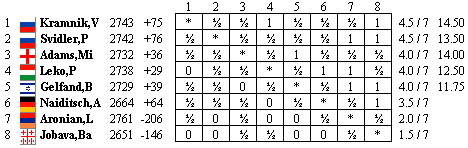
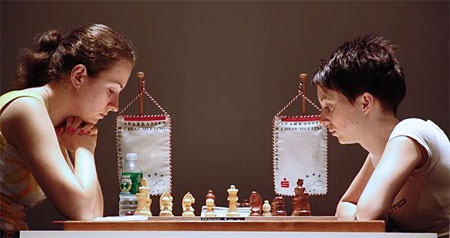
The Dortmunder Sparkassen Chess Meeting is taking place in the State Theatre (Schauspielhaus) in Dortmund, Germany, from July 29th to August 6, 2006. It is a single round robin tournament with eight players, averaging 2720 Elo and making for a category 19 event. Vladimir Kramnik vs Peter Leko was the game to watch. Naturally everyone remembered their world championship match in Brissago in 2004, in which the challenger Leko came within a hair's breadth of taking Kramnik's title (the latter won the last game to draw the match and retain his title). This was Peter's chance to win the last-round game in Dortmund, or at least to rock-solidly draw it to stay ahead of his Russian rival. The two followed a game played by Kramnik's second Evgeny Bareev against Leko's compatriot Zoltan Almasi at the Amber blindfold tournament in Monacco 2003. At move 22 Peter Leko deviated and soon found himself two pawns down. One was a dangerous passer that advanced to b7 and had to be traded for a bishop. In the endgame with an an extra piece Kramnik had little trouble and ended up taking game, set and match. Peter Svidler vs Michael Adams ended long before all of this happened. In a Closed Ruy Lopez the draw agreement came on move 17, ensuring Svidler equal first and Adams equal third. Arkadij Naiditsch vs Baadur Jobava, a classical Caro-Kann, went sour on the Georgian on move 27: Naiditsch,A (2664) - Jobava,Ba (2651) [B19] Black has defended against the mate threat on g7 by playing his bishop to g5. He is fearless of 27.f4 because he has 27...axb3 with deadly mate threats of his own. However, after White plays 27.bxa4 the black threat has disappeared and Jobava must worry about the bishop. 27...Qc6 28.f4 b4! was an option, but not what came in the game: 27...bxa4? Now White can play 28.f4 and after 28...Qb5 29.Rd3 a3 simply pick up the bishop: 30.fxg5. Unlike in his previous game Jobava played on for ten more moves before conceding that he could not survive the game a piece down. 30...axb2 31.Bxb2 Ra4 32.Qe2 Qxg5 33.Qe5 Ra5 34.Qxg5 Rxg5 35.Red1 Rxg2 36.Rd8 Rxd8 37.Rxd8+ Kh7 38.c4 Rg5 39.Bd4 e5 40.Bf2 1-0. Boris Gelfand vs Levon Aronian was a sharp, exciting battle, a beautiful game to analyse with a chess engine. Gelfand,B (2729) - Aronian,L (2761) [E15] 14...Qc8. Aronian wants to turn this into a sharp tactical fight, where he believes he has an edge on the older, more positionally oriented Boris Gelfand. 15.Kb1. 15.axb4 cxb4 leaves the black queen x-raying the white king with very dangerous consequences. 15...a5 16.Ne5 Re8 17.Rhe1 Bf8 18.g4 g6 19.Bg3 Re6 20.f4 d6 21.Nxc6 Nxc6. The knight has been dangling on b4 for six moves. Gelfand has taken up the tactical challenge and is doing very well in this sharp position. 22.Nb5 Ne8. Now watch Gelfand finish off his young colleague from Armenia: 23.e5 dxe5 24.Bd5 a4 25.fxe5 Ng7 26.Qf3 Rb8 27.Nd6 Bxd6 28.exd6 Nd4 29.Rxd4 Rxe1+ 30.Bxe1 cxd4 31.Qxf7+ Kh8 32.d7 Qc5 33.Bb4 1-0. Kramnik's performance in this event was 2818, exactly the same as Peter Svidler, Adams, Leko, Gelfand and even Arkadij Naiditsch scored above their expectation and can expect to win rating points in the next FIDE list. They take the points from the two big losers of the event, Levon Aronian and Baadur Jobava, who performed at levels of 2555 and 2505 repectively. Quite traumatic for these bright young talents. The women's match between the best female players in the US and Germany, Irina Krush and Elisabeth Pähtz, ended in a narrow victory for the US lady, who won her fifth round game. All others were drawn. Photos: Dagobert Kohlmeyer | |||||||||||||||||||||||||||||||||||||||||||||||||||||||||||||||||||||||||||||||||||||||||||||||||||||||||||||||||||||||||||||||||||||||||||||||||||||||||||
The Dortmunder Sparkassen Chess Meeting is taking place in the State Theatre (Schauspielhaus) in Dortmund, Germany, from July 29th to August 6, 2006. It is a single round robin tournament with eight players, averaging 2720 Elo and making for a category 19 event. Peter Leko vs Boris Gelfand was a Sicilian Scheveningen, which ended after multiple exchanges in a 24-move draw. Michael Adams vs Arkadij Naiditsch saw the British GM on the attack, but his German counterpart defending well and finally liquidating to a 32-move draw. Levon Aronian vs Peter Svidler was a Grünfeld, in which the experienced St Petersburg GM wrapped everything up to an endgame with an extra pawn and same-colored bishops, enough to force the resignation of his Armenian opponent on move 47. Baadur Jobava vs Vladimir Kramnik was the talk of the day. On move 14 the classical chess world champion, playing with the black pieces, sprung a little trap, and one move later his young Georgian opponent resigned. Stunning! Jobava,Baadur (2651) - Kramnik,Vladimir (2743) White's last move allows Kramnik to spring a little trap: 14...Nxb4! 15.axb4 Ne4 and now, to the amazement of the kibitzers on Playchess.com (and, we assume, Dortmund, Paris, New York and the rest of the world) Jobava resigned. Black is clearly better after this piece sacrifice, though we cannot quickly explain why it justifies White's resignation. Much more lopsided positions have been played out by GMs of this calibre. Here, for what it is worth, is part of the discussion that took place on Playchess.com, with the spectators all equipped with the latest and fastest chess engines. 15...Ne4 Deep Junior 10: 1) 16.Rd3 (Deep Junior 10: 2) 16.Bd2 Bxb4 17.Rc1 Nxd2 18.Qxd2 Qc5 19.Ng1 Rfd8 20.Qe3 Qxe3+ 21.fxe3 Rac8 22.Nge2 Rc4 -1.55/16 ; Deep Junior 10: 3) 16.Rc1 Bxb4 -1.48/6 ; Deep Shredder 10: 1) 16.Rd3 Bxb4 17.Bd2 Qc5 18.Re3 Rfd8 19.Bd3 Nxc3 20.Bxh7+ Kf8 21.0-0 Rac8 -2.09/15 ; Deep Shredder 10: 2) 16.Rd4 Qxc3+ 17.Qxc3 Nxc3 18.Bd2 Ne4 19.Bd3 Nxd2 20.Kxd2 Rfd8 21.Rxd8+ -2.26/15 ; Deep Shredder 10: 3) 16.Bd2 Bxb4 17.Rc1 Nxd2 18.Nxd2 Qc5 19.Be2 Rac8 20.Ndb1 Qd5 21.Bf3 Qxe5+ 22.Qe2 Rxc3 23.Nxc3 Bxc3+ 24.Kf1 Bxf3 25.Qxf3 Rc8 -2.24/14 ) 16...Bxb4 17.Bd2 Qc5 18.Re3 Nxd2 19.Nxd2 Rac8 20.Ndb1 Rfd8 21.h4 Bd5 22.Rhh3 -1.24/16. [Click to replay]. In the women's match Irina Krush of the US drew first blood by defeating Elisabeth Pähtz with the black peces.
SPARKASSEN
CHESS MEETING
2006
July 28 to August 6, 2006Round six report
Round 6: Saturday, August 5, 15:00h
Peter Svidler
Arkadij Naiditsch
Vladimir Kramnik
Boris Gelfand
Sparkassen Chess-Meeting Dortmund (6), 05.08.2006
1.d4 Nf6 2.c4 e6 3.Nf3 b6 4.Nc3 Bb7 5.a3 d5 6.cxd5 Nxd5 7.Bd2 Nf6 8.Qc2 c5 9.dxc5 Bxc5 10.b4 Be7 11.e4 Nc6 12.Bf4 0-0 13.Rd1 Qc8 14.e5.

Standings after six rounds

Full Schedule and Results
Round 1: Saturday, July 29, 15:00h
Levon Aronian
Peter Svidler
Arkadij Naiditsch
Vladimir Kramnik
Round 2: Sunday, July 30, 15:00h
Vladimir Kramnik
Boris Gelfand
Peter Leko
Baadur Jobava
Round 3: Tuesday, August 1, 15:00h
Levon Aronian
Michael Adams
Peter Svidler
Arkadij Naiditsch
Round 4: Wednesday, August 2, 15:00h
Arkadij Naiditsch
Vladimir Kramnik
Boris Gelfand
Peter Leko
Round 5: Friday, August 4, 15:00h
Levon Aronian
Baadur Jobava
Michael Adams
Peter Svidler
Round 6: Saturday, August 5, 15:00h
Peter Svidler
Arkadij Naiditsch
Vladimir Kramnik
Boris Gelfand
Round 7: Sunday, August 6, 13:00h
Levon Aronian
Peter Leko
Baadur Jobava
Michael Adams
Links
The Dortmunder Sparkassen Chess Meeting is taking place in the State Theatre (Schauspielhaus) in Dortmund, Germany, from July 29th to August 6, 2006. It is a single round robin tournament with eight players, averaging 2720 Elo and making for a category 19 event. Vladimir Kramnik vs Michael Adams was a Petroff which at some stage looked like it would be very long and very tense, with Kramnik grinding out a win. However the game ended after 41 moves with a draw. Arkadij Naiditsch vs Peter Svidler, a closed Ruy Lopez, was hard fought, lasting almost six hours and ending in a queen and three pawns vs queen and two which White could not win. Naiditsch is playing what most spectators consider the most enterprising chess in Dortmund. Peter Leko vs Levon Aronian was an Exchange Ruy with an eighth move novelty by Leko. The result was a blocked position in which both sides shuffled their pieces during a protracted middlegame phase. Aronian was intent on holding on to a draw, Leko was casting around for more. On move 55 he exchanged knights and simplified to a rook and pawns ending which Aronian could not hold. The game ended on move 63 with the second victory in this tournament for Hungary's top GM, giving him the sole leadership in the cross tables. Boris Gelfand vs Baadur Jobava was a marathon encounter lasting six hours and forty-five minutes, coming immediately after his 7½ hour loss (to Michael Adams) which Gelfand had to endure yesterday. But he proved that a 38-year-old world class grandmaster can have world class stamina. Gelfand,B (2729) - Jobava,Ba (2651) [B39] Gelfand has liquidated to a pure pawn ending he believes he can win. 47.Kd4 Kc6 48.Ke5 Kd7 49.f4 Ke8 50.h4 h5 51.f5 f6+ 52.Ke6 gxf5. This is where computers, equipped with the ruthless perfection of their endgame databases, jump into action. After a second or two of thought and five hundred consultations of the tablebases Fritz announces that 53.e5! is mate in 69 moves. Terrifying. 53.e5! Boris found it in a couple of minutes and without access to the preprocessed analysis of hundreds of millions of positions. 53...fxe5 54.Kxe5 Kd7 55.Kxf5 Kd6 56.Kg5 Ke5 57.Kxh5 Kf4 58.Kg6 e5 59.h5 e4 60.h6 e3 61.h7 e2 62.h8Q e1Q. Perfectly played, says Fritz, wondering how on earth human beings can do it. The above position is mate in 59, and belongs to the most difficult five-piece endings. Against the perfect defence of a computer probably no human being (except of course John Nunn) would be able to win the full point, but of course Gelfand is facing another human being, whose defence is as weak or strong as Gelfand's attack. We put in some notes by the silicon oracle not to disparage the performance of the players, but to show how complex and incomprehensible these endgames are. Exclamation points indicate that the move played is the only one that wins in the given position. 63.Qb8+! Kg4 64.Qc8+! Kg3 65.Qh3+! Kf4 66.Qf5+ Kg3 67.Qh3+ Kf4 68.Qf3+! Ke5 69.g4! Kd4 70.g5! Qe8+ 71.Kg7 Qe7+ 72.Kh6 Kc4 73.Qf4+ Kb5? Bad defence, says Fritz. After 73...Kb3 White needs 47 moves to mate, now it is just 32 moves. 74.g6 Qe6 75.Kg5 Qe7+ 76.Kg4 Qg7 77.Qd6? More criticism from the database: 77.Qf5+ mates in 30, Gelfand's move increases it to 47. 77...Ka4 78.Kf5 Qc3 79.Qe5. The last moves have brought no improvement, and 79.Qe5 moves the win to 58 moves. 79...Qh3+ 80.Kg5 Qg2+ 81.Kf5 Qh3+ 82.Kf6 Qf3+ 83.Qf5 Qc3+. This is quite typical of the endgame. At move 62 it was 59 moves to win, now it is 58. And White must find 84.Qe5 to achieve even this. The only other move that wins is 84.Kf7, which would require 68 more moves. In the game White plays neither: 84.Kg5? Now the position is a theoretical draw. 84...Ka3 85.Qf8+ Ka4? Now it is mate in 59 again. Black should have played 85...Kb3 or 85...Ka2 to keep the draw. 86.Qa8+? The position is drawn again, White needed to find 86.Kg4! (only move to win). 86...Kb4 87.Qb7+ Ka5? Mate in 36. If Black had played 87...Ka3! the position would still be a draw. 88.g7 Qe5+ 89.Kg6 Qe6+ 90.Kh7 Qf5+ 91.Kg8 Ka4. What would you play in this position? Hint: there are only two moves that win for White. We would like to once again stress that we are not criticizing the play of the two GMs, but merely demonstrating the complexity of this endgame. Some day, maybe, computers will annotate games as follows: 1.e4 e6?? Allows mate in 23 million moves. 1...e5, 1...d5 or 1...a6 was required to hold the draw. 92.Qh1? Draw again. 92.Qa7+ wins in 35, 92.Qe7 wins in 39 moves. 92...Qc8+? Black needed to find 92...Kb3 or 92...Ka3 to hold on. Now it is mate in 32 moves. 93.Kh7 Qf5+ 94.Kh8 Qe5 95.Qh3 Qd4 96.Qe6 Qh4+ 97.Kg8 Qf4 98.Qd5 Ka3 99.Kh7 Qh4+ 100.Kg6 Qg3+ 101.Kf7 Qf4+ 102.Ke8. White has not allowed his opponent to escape into a theoretical draw, but it is still 32 moves to mate. 102...Qb8+ 103.Qd8. Now it is 45 moves. 103...Qb5+ 104.Qd7 Qh5+ (31 moves left) 105.Kf8 Qf3+ 106.Ke7 Qe4+ 107.Qe6 Qb7+ (22 moves) 108.Kf6 Qf3+ 109.Kg5 Qg3+ 110.Qg4 Qe5+ 111.Kh4 Qf6+ 112.Qg5 Qd4+ 113.Kh3 and Black resigned, 14 moves before mate. For those of you who are still awake, here is an "optimum" continuation: 113...114.Kh2 Qe6 115.g8Q Qe2+ 116.Qg2 Qh5+ 117.Qh3+ Qxh3+ 118.Kxh3 Kb4 119.Qd5 Kc3 120.Kg3 Kb2 121.Qc4 Ka1 122.Qb5 Ka2 123.Kf2 Ka1 124.Ke3 Ka2 125.Kd2 Ka1 126.Kc1 Ka2 127.Qa4 mate. [Click to replay] The above endgame is particularly interesting because there has been a fair amount of human analysis done on the endgame queen and g-pawn vs queen. This resulted from an endgame that appeared in practical play and was deeply analysed by the great endgame expert André Chéron. Botvinnik,Mikhail - Minev,Nikolay N [D47] Here the tablebases tell us that White must play 77.Kg4 for a mate in 60 moves (or 77.Kg5/Kh4/Kh6 or 77.Qf3/Qf2/Qd3 for slightly longer mates). But Botvinnik played 77.Qf4+? which allows Black to escape with a draw. Chéron showed that the best defensive strategy for Black is, somewhat incredibly, to move his king to the square a1. So Minev's reply in the game, 77...Ka5?, is a deadly mistake and allows White to win again, now in 35 moves. Botvinnik did it with 78.Qd2+ Ka4 79.Qd4+ Ka5 80.Kg5 Qe7+ 81.Kf5 Qf8+ 82.Ke4 Qh6 83.Qe5+ Ka4 84.g7 Qh1+ 85.Kd4 Qd1+ 86.Kc5 Qc1+ 87.Kd6 Qd2+ 88.Ke6 Qa2+ 89.Qd5 Qe2+ 90.Kd6 Qh2+ 91.Kc5 1-0. [Click to replay] If you replay the Gelfand-Jobava game you will see that the errors seem to arise when Black fails to move his king in the right direction, towards the square a1 – and when White almost forces him to do so. Moving the black king to a1, or preventing it from getting there, is one of the few strategies that are comprehensible to human beings. Unfortunately the endgame database just provide us with the best moves in any given position, but are unable to give reasons for the choice. Fritz may play the endgame with absolute perfection, but if you ask it why a certain move must be played its only answer is "because that's what it says in the list" (of hundreds of millions of positions).
SPARKASSEN
CHESS MEETING
2006
July 28 to August 6, 2006Round five report
Round 5: Friday, August 4, 15:00h
Levon Aronian
Baadur Jobava
Michael Adams
Peter Svidler
Sparkassen Dortmund GER (5), 04.08.2006
1.Nf3 c5 2.c4 Nc6 3.d4 cxd4 4.Nxd4 g6 5.e4 Bg7 6.Be3 Nf6 7.Nc3 Ng4 8.Qxg4 Nxd4 9.Qd1 Ne6 10.Rc1 Qa5 11.Be2 b6 12.Qd5 Rb8 13.Qxa5 bxa5 14.b3 Bd4 15.Bd2 d6 16.0-0 Bc5 17.Na4 Ba3 18.Rb1 Bb7 19.f3 Bc6 20.Bxa5 Bxa4 21.bxa4 Kd7 22.Rfd1 Nc5 23.Bc3 Rhc8 24.a5 Na4 25.Be1 Nb2 26.Rdc1 Bb4 27.Bf2 Bxa5 28.c5 dxc5 29.Rxc5 Rxc5 30.Bxc5 Bc3 31.a4 Ke6 32.Bb5 Kf6 33.Rc1 a6 34.Rxc3 axb5 35.a5 Ke6 36.Rb3 Na4 37.Be3 Kd7 38.a6 Ra8 39.Rxb5 Rxa6 40.Bd4 Rd6 41.Rb7+ Kd8 42.Rb4 Ra6 43.Kf2 Kc7 44.Ke3 Nb6 45.Bxb6+ Rxb6 46.Rxb6 Kxb6


Amsterdam ol (Men) fin-A Amsterdam (5), 17.09.1954

Additional information
Standings after five rounds

Full Schedule and Results
Round 1: Saturday, July 29, 15:00h
Levon Aronian
Peter Svidler
Arkadij Naiditsch
Vladimir Kramnik
Round 2: Sunday, July 30, 15:00h
Vladimir Kramnik
Boris Gelfand
Peter Leko
Baadur Jobava
Round 3: Tuesday, August 1, 15:00h
Levon Aronian
Michael Adams
Peter Svidler
Arkadij Naiditsch
Round 4: Wednesday, August 2, 15:00h
Arkadij Naiditsch
Vladimir Kramnik
Boris Gelfand
Peter Leko
Round 5: Friday, August 4, 15:00h
Levon Aronian
Baadur Jobava
Michael Adams
Peter Svidler
Round 6: Saturday, August 5, 15:00h
Peter Svidler
Arkadij Naiditsch
Vladimir Kramnik
Boris Gelfand
Round 7: Sunday, August 6, 13:00h
Levon Aronian
Peter Leko
Baadur Jobava
Michael Adams
Links
|
Dortmund R4: Adams beats Gelfand in 7½ hours
The Dortmunder Sparkassen Chess Meeting is taking place in the State Theatre (Schauspielhaus) in Dortmund, Germany, from July 29th to August 6, 2006. It is a single round robin tournament with eight players, averaging 2720 Elo and making for a category 19 event. Michael Adams vs Boris Gelfand was a real chess marathon, lasting seven hours and 25 minutes. It was a Sicilian Najdorf, naturally, in which the British player applied determined pressure throughout. Adams,Mi (2732) - Gelfand,B (2729) [B90] 35.Qb5 threatening 36.Nxe7, so 35...Kf8 36.Qb2 threatening of course 37.Qh8 mate. 36...Ng7 37.Nxe7 Qc4, not 37...Rxe7 38.Rb8 winning the queen for a rook and minor piece. White is now a pawn up, and now 38.Nd5 Qxe4 39.Nf6 Qe1+ 40.Kh2 Rc8 41.Nxh7+ looked quite compelling, but Adams went for a different line: 38.Qf6 Qxe4 39.Nf5 Qe1+ (not 39...gxf5 40.Qxf7#) 40.Kh2 Qe5+ 41.Qxe5 dxe5 42.Nd6 Rd8 43.Nxf7 Rc8 44.Ng5 h5 45.Nh7+ Kg8 46.Nf6+ Kf8 47.Nh7+ Kg8 48.Nf6+ Kf8. Draw by repetition? No, just a couple of rest moves. Adams fights on, going after the second pawn: 49.Nd7+ Kg8 50.Rb2 Kf7 51.Nxe5+ Kf6 52.Nf3 Ne6 53.Rb6 Ke7 54.Ne5 g5 55.c4 h4 56.Rb7+ Kf6 57.Ng4+ Kg6 58.Rb6 Kf7 59.Rb7+ Kg6 60.Ne3 Ra8 61.Rb6 Kf7 62.g3 Ra2 63.Kg2 hxg3 64.Kxg3. White is two pawns up, but the path to victory is long and convoluted. 64...Nc5 65.Kf3 Nd3 66.Ng4 Ke7 67.Rb3 Nc5 68.Re3+ Kf7 69.Ne5+ Kf6 70.Ng4+ Kg6 71.Re5 Ra3+ 72.Ne3 Nd3 73.Rd5 Rc3 74.Rd4 Ra3 75.h4 gxh4 76.Rxh4 Simplified to just two extra pawns, but still a long way to go. 76...Ra2 77.Rh2 Kf6 78.Ke4 Nc5+ 79.Kd5 Nb3 80.f3 Ra5+ 81.Ke4 Nc5+ 82.Kf4 Ne6+ 83.Kg3 Ra3 84.Re2 Kg5 85.Nc2 Ra6 86.Nb4 Rb6 87.Nd5 Rd6 88.Re5+ Kh6 89.Nf4 Nc7 90.c5 Rc6 91.Kg4 Kg7 92.Kf5 Kf7 93.Ke4 Ra6 94.Rf5+ Ke8 95.Ke5 Rc6 96.Nd3 Ke7 97.Rh5 Re6+ 98.Kd4 Rf6 99.f4 Ra6 100.Rh7+ Kd8 101.f5 Ne8 102.Nb4 Ra1 103.Nc6+ Kc8 104.Rh8 Kd7 105.Ne5+ Ke7 106.Ng6+ Kd8 107.Kd5 Re1 108.c6 Rd1+ 109.Ke5 Kc7 Now comec a tactical trick: 110.Rxe8 Re1+ 111.Kd5 Rxe8, which Adams now spoils with 112.f6? (112.Nf4 was required). 112...Rd8+ 113.Kc5. 113...Rd1? This move throws away the draw that White has allowed. The correct defence, as Fritz will tell you, is 113...Ra8! 114.Ne7 (114.f7 Ra5+ 115.Kd4 Rf5 116.Ne5 Rxf7 117.Nxf7=) 114...Ra5+ 115.Kd4 Kd6 and White can make no progress, e.g. 116.Kc4 Rc5+ 117.Kd4 Rxc6 118.Nxc6 Ke6=. After the text move Adams was able to finish the game with a full point: 114.f7 Rc1+ 115.Kd5 Rd1+ 116.Ke6 Rf1 117.Ne7 1-0. [Click to replay] Levon Aronian vs Arkadij Naiditsch looked very promising for White, but Naiditsch defended imaginatively and Aronian let it slip. A well-fought draw in 45 moves. Peter Svidler vs Vladimir Kramnik was a predictable Petroff that ended after 39 moves in a draw. Baadur Jobava vs Peter Leko was a Queen's Indian, with a cease-fire being agreed after 22 moves. Elisabeth Pähtz vs Irina Krush: the fourth game of the women's match also ended in a draw, in 25 moves. Thursday is a rest day at the Sparkassen Chess Meeting, and the next round begins on Friday, August 4th, at 15:00h CEST. The final round is on Sunday. You can watch the action, together with some very strong players, on our chess server Playchess.com. | |||||||||||||||||||||||||||||||||||||||||||||||||||||||||||||||||||||||||||||||||||||||||||||||||||||||||||||||||||||||||||||||||||||||||||||||||||||||||||
| Unless specifically designated otherwise, it is always White to move. Unlike problems, studies usually do not require a solution in a pre-determined number of moves. Simply look for the best moves and replies to work out the win or draw. And don't be discouraged if at first you don't succeed - working out the solution will be satisfying - even instructive!
The current study is presented immediately following. Items in our Archives, including this week's selection, are available for you to download.
|
|
The solution to this week's Endgame Study جواب مسئله آخر بازی این هفته در پایین صفحه آمده است. | |
|
مسئله آخر بازی شماره ۴۹۷ Endgame Study #497 | |
|
|
V. Kuzmichev Shakmatni Zadatschi 1995 Win سفید می برد |
| Solution to This Week's Endgame Study
1 Kg6/i Kf4 2 h4 Kg4 3 h5 and wins. i) 1 h4 Kf5 2 h5 Kf6 (2...Kg5 3 h6 Kf6 4 Kg8) 3 h6Kf7; 1 Kh6 Kf5. |
![]()
![]()
![]()
![]()
![]()
![]()
![]()
![]()
![]()
![]()
![]()
![]()
![]()
![]()
![]()
![]()
![]()
![]()
![]()
![]()
![]()
![]()
![]()
![]()
![]()
![]()
![]()
![]()
![]()
![]()
![]()
![]()
![]()
![]()
![]()
![]()
![]()
![]()
![]()
![]()
![]()
![]()
![]()
![]()
![]()
![]()
![]()
![]()
![]()
![]()
![]()
![]()
![]()
![]()
![]()
![]()
![]()
![]()
![]()
![]()
![]()
![]()
![]()
![]()
سفید شروع می کند و می برد
White to move and win
آرشیو راه حل کمک
[need a hint?] [Solution] [archive]
|
Dortmund R3: All games drawn, but some excitement
The Dortmunder Sparkassen Chess Meeting is taking place in the State Theatre (Schauspielhaus) in Dortmund, Germany, from July 29th to August 6, 2006. It is a single round robin tournament with eight players, averaging 2720 Elo and making for a category 19 event. All games drawn, with an average length of under 30 moves, no change in the cross tables. Sounds bad, but there were sparks of excitement in the third round. Arkadij Naiditsch, playing black against Vladimir Kramnik, got into a fairly unpleasant position out of the opening: Kramnik,V (2743) - Naiditsch,A (2664) [E04] Naiditsch has seen this line before, having won two games last year, against Nielsen and Avrukh, who played 10.Qc2 instead of Kramnik's novel 10.Qd3. Arkadij reacted with a daring pawn advance, 10...c5, that looked as if it simply lost material: 11.dxc5 Bxc5 12.Qc3 attacking the bishop and the pawn on g7 (although taking on c5 is not quite straightforward: 12...Nd5 13.Qxc5 is followed by 13...Rc8 and Black is fine). 12...Rc8 13.Qxg7 Bf8. Naiditsch was apparently spoiling for a fight, with 14.Qxh8 Rxc1+ 15.Kd2 Rxh1 16.Bxh1 Ba4+ 17.Qd4 Nac4+, although after 18.Ke1 Bg7 19.Qxd8+ (19.Qxg7 Qd1#) 19...Kxd8 White would appear to have the upper hand. But Kramnik decided instead to swap queens immediately: 14.Qg5 Qxg5 15.Bxg5 Bg7 16.Nbd2 h6 17.Bf4 Bxb2 18.Rb1 Nd5 19.Bd6 Bg7 20.Ne5 Nc3. Here Garry Kasparov, kibitzing on Playchess.com, advocated 20...Rc2 with a clear advantage for Black. 21.Rc1 Nxa2 22.Rxc8+ Bxc8 23.0-0 Nc3 24.Ra1 Nb5 25.Rxa5 Nxd6 26.Nec4 Ke7 27.Rxa7 Bd4 28.Ra8 Nxc4 29.Nxc4 b5 30.e3 Bd7 31.exd4 Rxa8 32.Bxa8 bxc4 33.Kf1 Kd6 34.Ke2 Bc6 35.Bxc6 Kxc6 36.Kd2 Kd5 37.Kc3 Ke4 38.Kxc4 Kf3 39.d5 exd5+ 40.Kxd5 Kxf2 41.Ke5 Kg2 42.Kf6 Kxh2 43.Kxf7 Kxg3 44.Kg6 ½-½. The game lasted four hours. Peter Leko vs Michael Adams looked quite wild, with Black getting a queen and pawn for three minor pieces and an optically great position by move 14. But it turns out that this variation is known (it was used by Alex Shabalov in a Playchess blitz tournament in 2004) and on move 25 Adams went for a draw by repetition, instead of heeding the pleas of the visitors to Playchess.com and playing ...Rd6 to continue his winning attempts. Baadur Jobava vs Levon Aronian was a 21 move draw in the Four Knights Variation of the English, while Boris Gelfand vs Peter Svidler, an Exchange Grünfeld, lasted 29 moves and ended in a draw. | |||||||||||||||||||||||||||||||||||||||||||||||||||||||||||||||||||||||||||||||||||||||||||||||||||||||||||||||||||||||||||||||||||||||||||||||||||||||||||
|
Dortmund R2: All games drawn
The Dortmunder Sparkassen Chess Meeting is taking place in the State Theatre (Schauspielhaus) in Dortmund, Germany, from July 29th to August 6, 2006. It is a single round robin tournament with eight players, averaging 2720 Elo and making for a category 19 event. The first game to end in the second round of the Sparkassen Chess-Meeting was Peter Svidler vs Peter Leko. Both players had won their first-round games and the 23-move draw left them at the top of the table. The longest game was Levon Aronian vs Vladimir Kramnik, which lasted 43 moves and a total of four hours and 15 minutes. Aronian,L (2761) - Kramnik,V (2743) [D20] 23.e6 Rd1 24.Qxd1 Qxd1 25.e7 Qxf1+ 26.Rxf1 Re8 27.Rd1 f5 28.Bxf5 Rxe7 29.g3 g6 30.Bb1 c6 31.a3 Nd5 32.Bd3 Kg7 33.Kg1 Ne3 34.Re1 Kf6 35.h3 Nf5 36.Rxe7 Nxe7 37.Kf2 h6 38.Ke3 b6 39.b4 Nf5+ 40.Bxf5 Kxf5 41.g4+ Ke6 42.Kd4 h5 43.a4 ½-½. Arkaidij Naiditsch and Baadur Jobava both scored their first half-points, after their losses in the first round. Naiditsch did it on the white side of a Najdorf against specialist Boris Gelfand, while Jobava held his black game with a Caro Kann Panov against Michael Adams. On the same stage as the Super-GMs two women are playing a match: Germany's strongest female player, and former Women's Junior World Champion Elisabeth Pähtz, 21, Elo 2456 and number 22 in the current women's world rankings, vs the strongest female player in the USA, Irina Krush, 22, Elo 2436, women's world ranking 34. The first two games between the two ended in draws, in 28 and 18 moves. Click here to replay and download these games. Photos by Jeroen van den Belt | ||||||||||||||||||||||||||||||||||||||||||||||||||||||||||||||||||||||||||||||||||||||||||||||||||||||||||||||||||||||||||||||||||||||||||||||||||||||||||||
The Dortmunder Sparkassen Chess Meeting is taking place in the State Theatre (Schauspielhaus) in Dortmund, Germany, from July 29th to August 6, 2006. It is a single round robin tournament with eight players, averaging 2720 Elo and making for a category 19 event. The first game to finish on the first day in Dortmund was Gelfand vs Kramnik, which lasted all of 19 moves and ended with all the pieces and all pawns save for one on each side still on the board. Leko,P (2738) - Naiditsch,A (2664) [E11] Black is already in terrible trouble, but the crunch comes after 32...Nde5 33.e7 (the pawn cannot be taken since the g-knight is forced to protect its brother on e5) 33...Rc8 34.Bh5 1-0. Michael Adams had winning aspirations against the world's number three, Levon Aronian. But the Armenia liquidated to a rook ending with four against Adams' five pawns, but one that Aronian held without too much difficulty. The game of the day was between Baadur Jobava, a hot new player who won the Aeroflot Open to get a place in the Dortmund Super-GM, and Peter Svidler, who is now firmly entrenched near the top of the rating list. Jobava showed little respect and played a very nice attacking game that impressed former world champion Garry Kasparov who was kibitzing on Playchess.com. However when things did not work out as he had expected the young Georgian kept on pressing instead of forcing a draw. As is often the case in such situations his position slowly deteriorated until the draw was suddenly no longer an option and "Pyotr" Svidler was able to take home the full point with the black pieces. Photos by Jeroen van den Belt
SPARKASSEN
CHESS MEETING
2006
July 28 to August 6, 2006


The venue is the state theatre in Dortmund, GermanyParticipants
Name
Fed.
Rating
Birth
Levon Aronian
ARM
2761
06.10.1982
Vladimir Kramnik
RUS
2743
25.06.1975
Peter Svidler
RUS
2742
17.06.1976
Peter Leko
HUN
2738
08.09.1979
Michael Adams
ENG
2732
17.11.1971
Boris Gelfand
ISR
2729
24.06.1968
Arkadij Naiditsch
GER
2665
25.10.1985
Baadur Jobava
GEO
2651
26.11.1983 Round one report
Round 1: Saturday, July 29, 15:00h
Levon Aronian
Peter Svidler
Arkadij Naiditsch
Vladimir Kramnik

Gelfand vs Kramnik was drawn in 19 moves
Peter Leko (left) neatly outplayed last year's surprise winner of Dortmund, Arkadij Naiditsch, mainly by using his central pawns.
Sparkassen Dortmund GER (1), 29.07.2006
1.d4 Nf6 2.c4 e6 3.g3 Bb4+ 4.Bd2 c5 5.Bxb4 cxb4 6.Bg2 0-0 7.Nf3 d6 8.0-0 Nc6 9.d5 exd5 10.cxd5 Ne7 11.Nh4 Qb6 12.e4 Bg4 13.Qb3 a5 14.h3 a4 15.Qd3 Bd7 16.Re1 Rfc8 17.Nf3 Ng6 18.Nbd2 a3 19.Rab1 Ba4 20.Qd4 Qxd4 21.Nxd4 Bc2 22.Rbc1 Bd3 23.Rxc8+ Rxc8 24.bxa3 bxa3 25.f4 h5 26.Re3 Ba6 27.Kf2 h4 28.Bf3 Rc1 29.e5 dxe5 30.fxe5 Nd7 31.e6 fxe6 32.dxe6


Pressing too hard: Baadur Jobava of Georgia

Full Schedule and Results
Round 1: Saturday, July 29, 15:00h
Levon Aronian
Peter Svidler
Arkadij Naiditsch
Vladimir Kramnik
Round 2: Sunday, July 30, 15:00h
Vladimir Kramnik
Boris Gelfand
Peter Leko
Baadur Jobava
Round 3: Tuesday, August 1, 15:00h
Levon Aronian
Michael Adams
Peter Svidler
Arkadij Naiditsch
Round 4: Wednesday, August 2, 15:00h
Arkadij Naiditsch
Vladimir Kramnik
Boris Gelfand
Peter Leko
Round 5: Friday, August 4, 15:00h
Levon Aronian
Baadur Jobava
Michael Adams
Peter Svidler
Round 6: Saturday, August 5, 15:00h
Peter Svidler
Arkadij Naiditsch
Vladimir Kramnik
Boris Gelfand
Round 7: Sunday, August 6, 13:00h
Levon Aronian
Peter Leko
Baadur Jobava
Michael Adams
Links
برای اینکه بتوانید از این فایلها استفاده کنید نیاز به برنامه ای دارید که بتواند فایلهای PGN را بخواند و پوزیسیونها را آنالیز کند.(همچنین برای دیدن راه حل تمرینات)ما توصیه می کنیم از Chessbase استفاده کنید که می توانید با کلیک بروی متن آبی رنگ زیر که رایگان است (و کاربردهای مفید عالی دارد که تمرینات تصادفی خوانده می شود) آنرا دانلود کنید.
In order to use these files, you need a chess program which can read PGN files and analyze positions (in order to show the solutions to the exercises). We recommend ChessBase Light, which you can download from ChessBase for free (and which has an extremely useful feature called "Random Training").
راستی,اگر شما مایل به بهبود توانایی تاکتیکی خود هستید,شما می توانید اندرزهای بیشتری را در مقاله ما بوسیله کلیک بروی متن آبی رنگ زیر پیدا کنید.
By the way, if you are interested in improving your tactical abilities, you can find more advice in our article "Practicing Tactics."
تاکتیک:این مجموعه از تاکتیکها از کتاب 1001 قربانی و ترکیب است از فرد رینفلد.
فایلها بوسیله تم دسته بندی شده اند و همچنین یک مجموعه استادی که شامل 1001 پوزیسیون می باشد و اشاره دارد به اینکه سفید یا سیاه حرکت را شروع می کند.اگر مایل هستید دانلود کنید.
1001 Tactics: These collections of tactics are from Fred Reinfeld's 1001 Winning Chess Sacrifices and Combinations, which to the best of our knowledge is in the public domain. (Some later editions may contain new text or analysis from later editors which may still be protected by copyright, but our files do not contain any text or analysis -- only the bare positions and an indication of whether it is White or Black to move.) The files are sorted by theme, and there is also a master collection which contains all 1001 positions, if you'd rather download it that way.
Pinning آچمزی
Knight Forks چنگال اسب
Double Attack حمله دوبل
Discovered Attack حمله برخاستی
Discovered Check کیش برخاستی
Double Check کیش دوبل
Overworked Piece سوارهای پر وظیفه
Removing the Guard برداشتن محافظ
Clearance پاکسازی
Interference تداخل
Queening Combinations ترکیب های وزیر
Weak Back Rank عرض آخر ضعیف
Queen Sacrifice قربانی وزیر
Skewer سیخ
Surprise Move حرکت غافلگیر کننده
Defensive Combinations ترکیب های دفاعی
Trapped Piece سوارهای طعمه
Zugzwang زوگ زوانگ(حرکت اکراهی)
Helpless King شاه بی دفاع
Weakened Castled Position تضعیف پوزیسیون قلعه
1001 Winning Chess Sacrifices & Combinations (one file containing all of the above)ترکیب ها و قربانی های برنده شطرنج(شامل همه 1001 موارد بالا)
| Checkmate! کیش مات! | |
|
Easy puzzles #2. پازل های آسان مات در ۲ |
Can you find the checkmates? White to move in all positions. For more info, see 10 New Puzzle Sets representing Fred Reinfeld. Solutions are at the bottom of the page.
آیا می توانید کیش مات را پیدا کنید؟در تمام پوزیسیون ها سفید شروع می کند.برای اطلاعات بیشتر بروی متن آبی رنگ بالا کلیک کنید.به نمایندگی فرد رینفلد.راه حل ها در پایین صفحه می باشد.
برای جواب روی متن آبی رنگ زیر کلیک کنید.
Click here for solutions.

Related Posts (on one page):
The Most Important Novelty of Chess Informant 96
Sasa Velickovic
Of particular interest to our readers is the high quality game Van Wely – Radjabov, where Van Wely surprised his opponent in a well-known position by playing 13.Ne6. In similar positions, White’s knight would only jump to the e6-square after Black played h6.
Van Wely probably estimated in his home analyses that it would be better to give Radjabov the chance to go wrong, and the game continuation proved him right. With its many subtle changes, it is no wonder that this was selected among the ten best games of the previous volume. I’m sure we will soon learn if Black has better possibilities.

Van Wely 2648 – T.Radjabov 2704
Khanty-Mansiysk (m/1) 2005 — 95/405
1.d4 Nf6 2.c4 g6 3.Nc3 Bg7 4.e4 d6 5.Nf3 0-0 6.Be2 e5 7.0-0 Nc6 8.d5 Ne7 9.b4 Nh5 10.Re1 f5 11.Ng5 Nf6 12.f3 Kh8

13.Ne6!? [a novelty; 13.Be3 see 89/488] Be6 14.de6 fe4 15.fe4 Nc6 16.Nd5 Ne4 [16...Ng8 17.b5 Nd4 18.e7 Ne7 19.Bg5 Nd5 20.Bd8 Nc3 21.Qd3 Nce2 22.Re2 Ne2 23.Qe2 Rad8 24.Qe3 and White is superior] 17.Bf3 Nf6 [17...Ng5 18.Bg5 (18.b5!? Nf3 19.gf3; 18.Bg4!?) Qg5 19.e7 Ne7 20.Nc7 e4 21.Re4 Rf3 22.Na8] 18.b5 Nd5?! [18...Ne7 19.Nf6 Rf6 20.Bb7 Rb8 21.Bd5 and White is superior; 21.Be4 and White is superior] 19.bc6 Nb6 [19...e4 20.cb7 Rb8 21.cd5 ef3 22.gf3 Ba1 (22...Be5 23.Rb1 Qh4 24.Re5 de5 25.Be3 and White is winning) 23.e7 Qe8 24.ef8Q Qf8 25.Qa4 and White is winning; 19...Nc3 20.cb7 Rb8 21.Qc2 e4 22.Be4 and White is superior] 20.cb7 Rb8 21.c5! e4 [21...dc5 22.Qd8 Rfd8 23.e7 Re8 24.Bg5 h6 25.Bc6] 22.Re4 dc5 23.Qd8 Rfd8

24.Bg5! Re8 [24...Ba1 25.Bd8 Rd8 26.e7 Re8 27.Re2 and White is winning] 25.Rd1 Bd4 26.Red4 cd4 27.e7 [27.Bf6 Kg8 28.Rd4 Re6 29.Rd8 Re8 30.Re8 Re8 31.Bc6 Rb8 32.Be5 Nd7 33.Bc7 Kf7 34.Kf2! and White is winning] h6 28.Bf6 [28.Bc6 hg5 29.Be8 Nd5 30.Rd4 Ne7 31.Rd7! Re8 32.Re7 and White is winning] Kg8 29.Rd4 Kf7 30.Rd8! (and White is winning) Nd7 [30...Kf6 31.Re8 Re8 32.Bc6 Rb8 33.e8Q Re8 34.Be8] 31.Bh4 g5 32.Rd7 Ke6 33.Bg4 Kf6 34.Be1 Rb7 35.Bc3 Kg6 36.Bf3 Rb1 37.Kf2 Rc1 38.Rc7 Kf5 39.Bh5 Rc2 40.Kf3 1-0 [Van Wely]
Bareev 2675 – Sergey Karjakin 2658
Beer-Sheva 2005 — 95/328
1.d4 d5 2.c4 c6 3.Nc3 Nf6 4.e3 e6 5.Nf3 Nbd7 6.Bd3 dc4 7.Bc4 b5 8.Bd3 a6 9.e4 c5 10.e5 cd4 11.Nb5 ab5 12.ef6 gf6 13.0-0 Qb6 14.Qe2 Ba6 15.a4 Nc5 [15...ba4 16.Ra4 Nc5 17.Ba6 Na4 18.Bb5 Ke7 19.Nd4 Qd4 20.Rd1 Qa7 21.Bf4 Rd8 22.Rd8 Kd8 23.Qd3 and White is winning; 15...Rd8 16.Bd2 and White is superior; 15...Bc5 16.a5 Qb8 17.Bd2 and White is superior] 16.ab5 Bb7 17.Ra8 Ba8

18.Nd4! [a novelty; 18.Bf4 see 61/486] Qd6 19.b6! Nd3 [19...Qd4 20.Bb5 Ke7 21.Be3 Qd5 22.f3 Qe5 23.Rd1 and White is winning] 20.Qd3 Qb6 21.Be3 [21.Qc4!? Bc5 22.Be3 with initiative] Qb7 22.f3 [22.Nf3? Rg8 with attack] Be7 23.Bh6 [23.Rc1! 0-0 24.Nc6 Re8 25.Rc4 f5 26.b4 Bf6 27.b5 Bg7 28.Rc1 and White is superior] Bf8 24.Be3 Be7 25.Bh6 Bf8 26.Nf5!? Qd5! [26...ef5 27.Qf5! Qd5 (27...Qb6 28.Kh1 Qe6 29.Qb5 and White is winning; 27...Be7 28.Bg7 Rg8 29.Qh7 and White is superior) 28.Qc8 Qd8 29.Rc1 Qc8 30.Rc8 Kd7 31.Rf8 Rf8 32.Bf8 and White is superior] 27.Qd5 [27.Ng7 Kd7 with counterplay, with the idea Bc5] Bd5 28.Bf8 Rf8 29.Ne3 (and White is slightly better) Bc6 30.Rc1 Bd7 31.Rc7 Ke7 32.Rb7! [with the idea Nc4] Rc8 [32...Kd6 33.b4 and White is slightly better] 33.b3 Kd8! 34.Ng4 Ke7 35.Nf6 Kf6 36.Rd7 [with the idea Rd3] Rc3! [R 6/f] 37.Rb7 h5 38.h4 Kg6 39.b4 Rb3 40.Rb8 Rb2 41.b5 Kg7 42.b6 e5 43.b7! f5 44.Kf1 e4 45.Ke1 Kh7? [45...Rb6 equal] 46.Kd1? [46.Rf8 Rb7 47.Rf5 ef3 48.Rh5 Kg6 49.Rg5 Kf6 50.g3 and White is winning] Kg7 47.Kc1 Rb6 48.Kd2 Rb5 49.Kc3 [49.Ke3 Rb4 only move, equal] Rb6 50.Kd4 Rb5 (only move) 51.Kc4 Rb1 52.Kd5 e3 (only move) 53.Re8 Rb7 54.Re3 Rb2 55.Ke5 Rg2 56.Kf5 Rg3 57.Ra3 [better is 57.Kf4] Kh6 58.Kf4 Rh3
½-½ [Sergey Karjakin]Predojevic 2558 – E.Romanov 2479
Istanbul 2005 — 95/115
1.e4 c5 2.Nf3 e6 3.Nc3 a6 4.d4 cd4 5.Nd4 Qc7 6.Bd3 Nf6 7.Qe2 Bd6

8.Ndb5! [a novelty; 8.Nf3 see 94/117; 8.g4 see 94/118] ab5 9.Nb5 Qa5 [9...Bb4?? 10.c3 and White is winning; 9...Qb6 10.Nd6 Qd6 11.e5 Qe7 12.ef6 Qf6 13.0-0 0-0 14.c3 and White is slightly better, with the idea a4, b4 queen's side initiative] 10.Bd2 Bb4 [10...Qb6 11.e5 Be7 12.ef6 Bf6 13.0-0 0-0 14.Bb4 and White is superior] 11.Bb4 Qb4 12.c3 Qc5 [12...Qa4 13.e5 Nd5 14.Nd6 Ke7 15.Bb5 Qh4 (15...Qf4 16.g3 Qh6 17.Qc4 and White is superior) 16.g3 Qh3 17.Qc4 Nc6 (17...Qg2 18.0-0-0 Na6 19.Qh4 f6 20.c4 and White is winning) 18.Qc5 Ne5 19.Nc4 Kf6 20.Qd4 d6 21.f4 and White is superior; 12...Qa5 13.e5 Ng8 14.Nd6 Kf8 15.Nc8 Nc6 16.Nd6 Qe5 17.Qe5 Ne5 18.Be4 and White is slightly better] 13.e5

13...Ng4! [13...Nd5 14.Nd6 a) 14...Kf8 15.Qf3 a1) 15...f6 16.Qh5 Ke7 17.Qf7 Kd8 18.Qg7 Re8 19.Ne8 Ke8 20.ef6 and White is winning; a2) 15...f5 16.Bf5! ef5 17.0-0-0! Ne7 (17...g6 18.Rd5 Qc6 19.g4 Ra2 20.gf5 and White is winning; 17...Kg8 18.Qf5 Nf6 19.Qf4 h6 20.ef6 and White is winning) 18.Qh5 a21) 18...g6 19.Qh6 Kg8 20.Ne8 Kf7 (20...Qe5 21.Rhe1 and White is winning) 21.Qg7 Ke8 22.Qh8 Kf7 23.Rd6 Ra6 24.Rf6 and White is winning; a22) 18...Ng6 19.Qf5 Ke7 20.Qg5 Ke6 21.g3!! Ra2 (21...Qf2 22.Rhf1 and White is winning; 21...Rf8 22.f4 Rf4 23.gf4 Qe3 24.Kb1 Qf4 25.Qg2 and White is winning; 21...Ne5 22.Rhe1 Qd6 23.Rd6 Kd6 24.Qe5 Kc6 25.b4 d5 26.Qg7 Rd8 27.Qe7 Rd6 28.b5 Kc5 29.Qc7 and White is winning) 22.Qf5 Ke7 23.Qf7 Kd8 24.Qa2 Rf8 25.f4 and White is winning; a3) 15...Nf6 16.Qf4 Nc6 17.ef6 Ne5 18.fg7 Kg7 19.Qg3 and White is superior; b) 14...Ke7 15.Qh5! g6 (15...f6 16.Qf7 Kd8 17.Qg7 Re8 18.Ne8 Ke8 19.Bh7 and White is winning) 16.Bg6!! fg6 17.Qh4 Kf8 18.Rd1! (with the idea Rd5) Ra4 19.Qa4 Kg7 20.0-0 and White is superior] 14.Qg4?! [14.Nd6?! Kf8! (14...Ke7 15.Qg4 Qe5 16.Ne4 and White is superior) 15.Qg4 Qe5 16.Ne4 f5 17.Qg5 Nc6 18.f4 Qd5 19.Nf2 Ra2 and Black is superior; 14.f4! a) 14...Nh6 15.b4 Qc6 16.Be4 Qb6 17.Nd6 Kd8 (17...Ke7 18.a4 and White is superior; 17...Kf8 18.Nc8 Qc7 19.Nd6 Qc3 20.Kf2 Qd4 21.Kg3 Ra3 22.Bf3 and White is superior) 18.a4 with the idea a5 and White is superior; b) 14...f5 b1) 15.Nd6 Kf8 16.h3 Nh6 17.g4 Nf7 18.Nc8 Qc8 19.gf5 ef5 20.Bf5 with compensation; b2) 15.h3 Nh6 16.b4 Qb6 (16...Qc6 17.Qh5 Kf8 18.Nd6 Qc3 19.Ke2 g6 20.Qh6 Kg8 21.Ne8 and White is winning) 17.Nd6 (17.Qh5 Ke7 18.Nd6 Qe3 19.Be2 Qg3) Ke7 18.Nc4 Qc7 19.0-0 (with the idea Qh5) b5 20.Nd6 Qc3 21.Rac1 Qd4 22.Kh1 and White is superior; 19...Nf7 unclear; b3) 15.b4! Qc6 (15...Qb6 16.Nd6 Ke7 17.Bf5!) 16.h3 Nf6 (16...Nh6 17.Qh5 Kf8 18.Nd6 Qc3 19.Ke2 g6 20.Qh6 and White is winning) 17.ef6 gf6 18.Qh5 Kf8 19.0-0 and White is superior; c) 14...h5! c1) 15.h3 Ne3 16.Nd6 Ke7 17.Qf2 c11) 17...Na6 18.Ba6 Ra6 19.Ke2 Rb6 20.b3 and White is winning; c12) 17...Qb6 18.Qh4 f6 19.Qg3 g5 20.Nc8 (20.Ne4 Qb2 21.ef6 Kd8) Rc8 21.ef6 Kf7 22.Bg6!; c13) 17...Ra5! 18.b4 Qc3 19.Ke2 Nc2 20.ba5 Na1 21.Qe1 Qe1 22.Re1 Nc6 23.Ra1 Na5 24.Ke3 Nc6 25.h4 with compensation; c2) 15.b4 Qb6 16.Nd6 Ke7 17.Nc4 Qc6 18.h3 Nh6 19.0-0 with attack] Qe5 15.Kd2! [15.Kf1 0-0 16.h4 (16.Re1 Qc5 17.h4 Ra2 18.Rh3 f5!) f5 17.Qd4 Nc6 18.Qe5 Ne5 19.Be2 and White is slightly better; 15.Qe2 Qe2 16.Ke2 Ke7 17.a4 (with the idea a5, b4) Nc6 18.b4 b6! 19.f4 Ba6 20.Kd2 and White is slightly better] 0-0 16.Qh4 [16.f4 Qf6! and White is slightly better] g6 [16...h6 17.Rhe1 Qg5 18.Qg5 hg5 19.Nd6 and White is superior; 16...f5 17.Rhe1 Qc5 18.Qd4 Qd4 19.cd4 and White is superior] 17.f4 [better is 17.Rhe1 Qg7 18.Nd6 Nc6 19.f4 with initiative] Qg7 [17...Qd5! 18.Qg5 (18.c4? Qg2 19.Kc3 Ra2! and Black is superior; 18.g4 Ra2 19.Ra2 Qa2 and Black is superior) Qc6 (18...Qg5 19.fg5 d5 20.Rhf1 Nc6 21.a3 Bd7 22.Rf6 and White is slightly better) 19.Nd4 Qb6 20.Kc2 Nc6 21.Qf6 d6 22.Rhe1 and White is slightly better] 18.g4 (with attack) Ra4 [18...d5?! 19.f5! g5 20.Qh5 Nd7 (20...e5 21.f6 and White is winning) 21.h4 ef5 22.hg5 and White is superior] 19.Rhf1 Nc6 [19...Rf4? 20.Rf4 g5 21.Qh7 and White is winning] 20.b3 time [better is 20.Nd6 e5 21.f5 g5 22.f6 gh4 23.fg7 Kg7 24.Be4 Ne7 25.c4 and White is superior] Ra5 21.a4 [21.b4 Ra4 22.Nd6 Ra3! with counterplay, weak point c3; 21.Nd6 Rd5!] f6! [21...d5 22.f5 g5 (22...ef5 23.gf5 g5 24.f6 gh4 25.fg7 Kg7 26.b4 Ra8 27.Nc7 Rb8 28.Nd5 and White is superior) 23.Qg3 e5 (23...f6 24.fe6 Be6 25.Rae1 Ne5 26.h3 with the idea Nd4) 24.f6 Qh6 25.b4 Ra8 26.Nc7 Be6 27.Na8 and White is superior] 22.Rae1 d5 23.g5! [23.Qg3? (with the idea g5) e5!; 23.f5 g5 24.Qg3 e5 and Black is superior] Bd7 [23...fg5 24.fg5 e5 25.Qh6! (25.Rf8 Qf8 26.Rf1 Qe7) Qh6 26.gh6 Be6 27.Nd6 Ra7 28.Bb5 Rf1 29.Rf1 and White is slightly better] 24.Qg3 Nd8?! [24...fg5 25.fg5 (25.Qg5 d4 26.c4 Nb4) e5 26.Nd6!? with initiative with the idea 26...Raa8 27.Nb7 Be6 28.Nc5 Qe7 29.b4, with the idea 26...Qe7 27.Rf8 Qf8 28.Re5! Ne5 29.Qe5 Bc6 (29...Qf3 30.Qe7 Qf4 31.Kc2 Qh2 32.Kb1 Qg1 33.Kb2 Qf2 34.Bc2 Bh3 35.Qd8 Qf8 36.Qa5 Qd6 37.Qa8 and White is winning) 30.Ne4! and White is superior; RR 30.Bf5! and White is winning] 25.Nd4 Ra8 26.h4 (and White is superior) Rc8 27.h5 f5 [27...gh5 28.Rh1 Be8 (28...fg5 29.Rh5 h6 30.fg5 Nf7 31.g6 Ng5 32.Reh1 e5 33.Rh6 ed4 34.Qg5 dc3 35.Kc1 and White is winning) 29.Ne6 Ne6 30.Re6 fg5 31.Qg5 Qg5 (31...Rf4 32.Qf4 Qg2 33.Re2 Qh1 34.Qg5 and White is winning; 31...Bg6 32.Bg6 and White is winning) 32.fg5 Rf2 33.Re2 Rf4 34.Ke3 and White is superior] 28.Qe3 Re8 29.Qe5 Qe5 30.Re5 Nf7 [30...Nc6 31.Re3 gh5 32.Rh1 and White is superior] 31.Re3 e5 [31...Nd6 32.hg6 hg6 33.Rh1 Kg7 34.Reh3 Rh8 35.Rh8 Rh8 36.Rh8 Kh8 37.Nf3 and White is superior; 31...gh5 32.Rh3 e5 33.fe5 and White is superior] 32.hg6 hg6 33.fe5 Re5 [33...Ne5 34.Rfe1 Nf7 35.Re8 Re8 36.Re8 Be8 37.Nf3 Bc6 38.Ke3 and White is superior, with the idea 38...d4 39.Nd4 Ng5 40.Nc6 bc6 41.a5 Ne6 42.a6 Nc7 43.a7 Kf7 44.Ba6 Ke6 45.Bb7 Kd6 46.a8Q Na8 47.Ba8 Kc7 48.Kf4 and White is winning; 33...Ng5 34.Rg3 and White is winning] 34.Re5 Ne5 35.Nf3! Nf7 [35...Nd3 36.Kd3 and White is superior; 35...Nf3 36.Rf3 Kf7 37.Rh3 Kg7 38.Rh4 and White is superior] 36.Re1 Re8 [36...Bc6 37.Re6 Kg7 38.Nh4 Nh8 39.Re7 and White is winning] 37.Re8 Be8 [NB 9/c] 38.Ke3 Kf8 39.Kd4 Ke7 40.Kc5! Nd6 41.a5 Kd7 [41...Ne4 42.Kb6 Kd6 (42...Kd7 43.Bb5 and White is winning; 42...Kd8 43.Kb7 Nc5 44.Kb6! Nd3 45.a6 and White is winning) 43.b4 (43.Be4 de4 44.Nd4 f4 45.Kb7 f3 46.a6 f2 47.a7 f1Q 48.a8Q Bc6! 49.Nc6 Qb5 50.Ka7 Qc5 equal) Bc6 44.Nd4 and White is winning] 42.Kd5 [42.Bb5! Nb5 43.Kb5 Kc7 (43...Kd6 44.Kb6 Bc6 45.Nd4 with the idea b4-b5 and White is winning) 44.Kc5 f4 45.Ne5 and White is winning] Bf7 43.Ke5 Bb3 44.Kf6 Ne4 45.Kg6 [45.Be4? fe4 46.Nd4 Bd1! (46...e3?? 47.Nb3 and White is winning; 46...Bc4 47.Nc2 and White is winning) 47.Kg6 e3 a) 48.Kh7 e2 49.Nf3 Kc6 50.g6 Kb5 51.g7 Bb3 52.g8Q (52.Nd4 Ka4 53.Nb3?? e1Q 54.g8Q Qh1 55.Kg7 Qg2 56.Kf8 Qg8 57.Kg8 Kb3 58.Kf7 Kc3 59.Ke6 Kb4 60.Kd5 Ka5 and Black is winning; 53.Ne2 equal) Bg8 53.Kg8 Ka5 54.Kf7 Kb5 55.Ke6 Kc4 56.Ke5 Kc3 57.Ke4 Kc2 58.Ke3 Kd1 59.Kd3 equal; b) 48.Kf5 e2 49.Nf3 Kc6 50.g6 b1) 50...Kb5 51.g7 Bb3 52.Nd4 Ka4 53.Ne2 (53.Nb3? e1Q 54.g8Q Qc3 equal) Ka5 54.Ke4 b5 55.Kd4 Bg8 56.Nf4 Ka4 (56...b4 57.c4 b3 58.Nd3 with the idea Kc3 and White is winning) 57.Nd5 Kb3 58.Nf6 Bf7 59.g8Q Bg8 60.Ng8 b4 61.c4 Kc2 62.Nf6 b3 63.Ne4 b2 64.Nc3 and White is winning; b2) 50...Bc2! 51.Kf6 Bg6 52.Kg6 Kc5 53.Kf5 Kc4 54.Ke5 Kc3 55.Kd6 Kb4 equal; c) 48.Kf6 e2 49.Nf3 Kd6 50.g6 Kc5 51.g7 (51.Ke5 Bb3 52.Kf4 Kc4 equal) Bb3 52.Ke5 Bg8 53.Ke4 Kc4 equal] Nc3 46.Bf5 Kd6 47.Nd2! (and White is winning) Bd5 48.Kf6 Ne2 49.Ne4 Kc6 50.Ke5 Nc1 51.Nc3 [51.Bd7 Kd7 52.Kd5 Ne2 53.Kc5 Kc7 54.Nf6 and White is winning] Bf7 52.Be4 Kc7 53.Nb5 Kb8 54.Nd6 Bh5 55.Nb7 Nb3 56.Bd5 Nd2 57.Nd8 [57.Nc5 and White is winning] Ka7 58.Kf4 Bg6 59.Ke3 Nf1 60.Kd4 Ng3 61.Kc5 Ka6

62.Nc6?? [62.Kb4 and White is winning; 62.Nb7 and White is winning] Ne4 63.Be4 Be4 equal [NB 3/g2] 64.Kd6 Kb5 65.Kc7 Ka6 [65...Bc6?? 66.a6 and White is winning] 66.Kd6 Kb5 67.Ne7 Ka5 [NB 3/e] 68.Ke5 Bh7 69.Kf6 Kb6 70.Ng6 Bg8 71.Nf8 Kc7? [71...Kc6! 72.Ke7 Kd5 73.g6 Ke5 74.Nd7 Kf5 75.g7 Be6 76.Kf8 Kg6 77.Ne5 Kf6 equal] 72.Ke7 (and White is winning) Kc6 73.g6 Kd5 74.Nd7! Kd4 [74...Ke4 75.Kf6 Kf4 (75...Bb3 76.Nc5; 75...Ba2 76.Ne5 Kf4 77.Nf7 Bb1 78.g7 Bh7 79.Nd6 Bg8 80.Ke7 Kg5 81.Kf8 Bh7 82.Kf7 Bg6 83.Kg8) 76.Ne5 Bb3 77.Nf7 Bc2 78.g7 Bh7 79.Nd6 Bg8 80.Ke7 Kg5 81.Kf8 Bh7 82.Kf7 Bg6 (82...Bb1 83.g8Q) 83.Kg8 Bd3 84.Nf7 Kf6 85.Kh8] 75.Kf6! Bb3 [75...Kd5 76.Ne5 with the idea Nf7, Kg7] 76.Ne5 Bc2 77.g7 Bh7 78.Nf3 Ke3 79.Ng5 Bg8 80.Ke7 [80...Kf4 81.Kf8 Bb3 82.Nf7] 1-0 [Predojevic, Iv.Markovic]
Iv.Sokolov 2696 – Harikrishna 2673
Hoogeveen 2005 — 95/(282)
1.d4 d5 2.c4 c6 3.Nc3 Nf6 4.Nf3 dc4 5.a4 Bf5 6.Ne5 Nbd7 7.Nc4 Qc7 8.g3 e5 9.de5 Ne5 10.Bf4 Nfd7 11.Bg2 g5 12.Be5 Ne5 13.Qd4 f6 14.0-0-0

14...Rd8! [a novelty; 14...Be7 see 95/(282)] 15.Qe3 Be7 16.Rd8 Kd8 17.Ne5 Qe5 18.Qa7 Ba3 19.Rd1 Kc8 20.Qd4 Qd4 21.Rd4 Bc5 22.Rd2 Be6 with compensation
Ulibin 2536 – E.Berg 2531
Santa Cruz de La Palma 2005 — 95/(195)
1.e4 e6 2.d4 d5 3.Nd2 Nf6 4.e5 Nfd7 5.c3 c5 6.Bd3 Nc6 7.Ne2 cd4 8.cd4 f6 9.ef6 Nf6 10.Nf3 Bd6 11.0-0 Qc7 12.Bg5 0-0 13.Bh4 Nh5 14.Qc2 h6 15.Bg6 Rf3 16.gf3 Bh2 17.Kh1 Nf4 18.Ng3

18...e5! [a novelty; 18...Qb6 see 86/272] 19.Kh2 Qd6 20.Bh7 Kh8 21.de5 Ne5 with compensation.
R.Ponomariov 2704 – Bareev 2675
Khanty-Mansiysk (m/2) 2005 — 95/205
1.e4 e6 2.d4 d5 3.Nc3 Nf6 4.e5 Nfd7 5.f4 c5 6.Nf3 Nc6 7.Be3 a6 8.Qd2 b5 9.a3 Bb7 10.g3

10...Qa5! [a novelty; 10...c4; 10...g6; 10...Qb6] 11.Ra2!? [11.a4?! Be7 (11...b4 12.Ne2) 12.Bg2 Nb6 13.b3 cd4 14.Nd4 Bb4 15.Nc6 Bc6 16.Bd4 Rc8 17.0-0 Bd7 18.Rf3 (18.ab5 Bc3 19.Ra5 Bd2 20.Ra6 Bb5 21.Rb6 Bf1 22.Bf1 0-0) ba4 with counterplay; 11.Rb1 b4 12.ab4 Qb4 13.Bg2 Nb6 14.b3 Rc8 with counterplay; 11.Bg2 b4 12.Ne2 cd4 with the idea13.Ned4 ba3 14.c3 ab2 15.Qb2 Qc7 16.0-0 Bc5] Rc8 [11...g5!? 12.Bh3 (12.Ng5 cd4 13.Bd4 Nd4 14.Qd4 Bc5 15.Qd3 d4 16.b4 Bb4 17.ab4 Qb4 with initiative) gf4 (12...h5 13.Ng5 cd4 14.Bd4 Nd4 15.Qd4 Bc5 16.Qd3 d4 17.Be6 and White is winning) 13.gf4 Rg8 14.f5 (14.Rg1 Rg1 15.Bg1 Bh6 unclear, weak point Ra2) Nce5 15.de5 d4 16.fe6 fe6 17.Be6 Bf3 18.Qf2 Ne5 19.Bg8 Bh1 20.Qf5 Bg7 21.Bh6 Bh6 22.Qe5 Kf8 23.Be6 Qd8 24.Nd5 Qh4 25.Kf1 Bd5 26.Bd5 Rd8 27.Qh8 Ke7 28.Qe5 Kf8 equal; 11...Qc7 12.Bg2 Nb6 (12...b4 13.ab4 cd4 14.Nd4 Bb4 15.0-0 Nb6 16.Nc6 Qc6 17.Bd4 Nc4 18.Qf2 and White is superior) 13.b3 b4 14.Ne2 (14.ab4 cd4 15.Nd4 Bb4 16.0-0 Rc8 17.Nc6 Qc6 18.Qf2 Bc3 19.Bb6 0-0 20.Bd4 Rc7 with counterplay) c4 (14...cd4 15.Ned4 ba3 16.f5 ef5 17.0-0 Nd4 18.Nd4 g6 19.e6 Bg7 20.ef7 Kf7 21.g4 with initiative) 15.a4 Na5 16.Qd1 0-0-0 17.0-0 g6 unclear] 12.Bg2 b4 [12...Qb6 13.Ne2; 12...Nb6 13.b3 cd4 14.Nd4 Nd7 (14...Ne5 15.b4 Nbc4 16.ba5 Nd2 17.Bd2 Nc4 18.Nb1 Bc5 19.Nb3 Ba7 20.c3 0-0 21.a4 ba4 22.Ra4 and White is superior) 15.Nc6 Rc6 16.b4 Qc7 17.Ne2 Nb6 18.Bb6 Qb6 19.Nd4 Rc4 20.c3 Be7 21.Bf1 Rc7 22.Bd3 0-0 23.0-0 Rfc8 24.Rf3 f6 with counterplay] 13.ab4 Qb4 14.0-0 cd4?! [14...Nb6! 15.Qf2 (15.b3 cd4 16.Nd4 Bc5 17.Nc6 Rc6 with counterplay, weak point Nc3) Nc4 16.Ra4 Qb2! 17.Rb1 Qc3 (17...cd4 18.Rb2 de3 19.Qe1 Nb2 20.Qb1 Na4 21.Qb7 and White is winning) 18.Rb3 Qb3 19.cb3 Ne3 20.Qe3 a) 20...Nd4 21.Nd4 cd4 22.Qd2 Be7 (22...Bc5 23.Bf1 d3 24.Kg2 Be3 25.Qb4 Rb8 26.h4 with the idea 26...d2 27.Ba6 d1Q 28.Bb5 Kd8 29.Qd6 Kc8 30.Qd7#) 23.Bf1 Rc3 24.b4 0-0 25.Qd4 Rfc8 26.Qb6 with initiative; b) 20...cd4 21.Qd2 b1) 21...a5 22.f5! (22.Bf1 Bb4 23.Qd1 0-0 24.Bd3 h6 unclear) ef5 23.Qg5 with initiative; b2) 21...Be7 22.Bf1 (22.Bh3 0-0 23.f5 f6) 0-0 23.b4 (23.Ba6 Ba6 24.Ra6 Nb4 25.Ra5 Rc2 26.Qd4 Rfc8 and Black is superior) Rb8 24.Nd4 Nd4 25.Qd4 Bc6 26.Ra6 Rb4 27.Qf2 Rc8 28.Rb6 equal] 15.Nd4 Nd4 16.Bd4 Bc5 17.Rd1 Bd4 18.Qd4 Rc4 19.Qf2! [19.Qa7 a) 19...Qc5 20.Qc5 Nc5 21.Bf1 (21.Ra5 Nd7 22.Bf1 Rb4 23.Ba6 Ba6 24.Ra6 Rb2 25.Ra8 Rb8 26.Rb8 Nb8) Rb4 22.Ne2 and White is slightly better; b) 19...Ke7 20.Bf1 Qc5 21.Qc5 Rc5 22.Ba6 Ba6 23.Ra6 Rb8 with compensation] 0-0 20.Bf1 Rc7 21.Qd4 a5? [21...Qe7 22.Ba6 Ba6 23.Ra6 Rb8 24.Rd6! and White is slightly better, with the idea 24...Qe8 25.Ra1 Rc4 26.Qa7! and White is superior]

22.Qb4! ab4 23.Nb5 Rc2 24.Nd4 (and White is superior) Rcc8 [24...Rc7 25.Ra7 Ra8 26.Ra8 Ba8 27.Ra1 Bb7 28.Nb5! Rc2 29.Ra7 Bc8 30.Nd6 and White is superior] 25.Ra7 Nc5 26.Rc1 Ba8 27.Ba6! [27.Ra8 Ra8 28.Rc5 Ra2 with counterplay] Na6 28.Rc8 Rc8 29.Ra6 [weak point Ba8] g5 [R 9/i] 30.b3! [30.fg5 Bb7 31.Rb6 Rc4! 32.Nb5 Bc6 33.Nd6 Rc1 34.Kf2 d4 with counterplay, passed pawn d] gf4 31.gf4 Bb7 32.Rb6 Rc7 33.Kf2 Bc8 34.Rc6! (and White is winning) Rc6 35.Nc6 Bb7 [35...Kf8 36.Ke3 Bb7 37.Nb4 Ke7 38.Kd4 Kd7 39.Kc5 Kc7 40.Nc2 Ba6 41.Nd4 Bd3 42.b4 Kb7 (42...Bg6 43.Nb5 Kb7 44.Nd6 Kc7 45.b5 h6 46.b6 Kb8 47.h3 Bh5 48.f5 Ka8 49.fe6 fe6 50.Nb5 Kb7 51.Nd4 Bf7 52.Nc6) 43.Nc6 (43.b5) Kc7 44.Ne7 and White is winning, with the idea Ng8-f6-e8-d6, b5] 36.Nb4 d4!? 37.Nc2 d3 38.Nb4 d2 39.Ke2 Kg7 40.Kd2 Kg6 41.Ke3 Kf5 42.Nd3 Bc6 43.b4 Kg4 44.Nf2 Kf5 45.h3!? [45.Nd1 Kg4 46.Nc3 Kh3 47.b5 Ba8 48.Ne4 h5 (48...Kh2 49.Nf6 h6 50.Ng4 and White is winning) 49.Ng5 Kh2 50.Kf2 and White is winning] h5 46.h4 Ba4 47.Kf3 Bc6 48.Kg3 Ba4 49.Nd3 Bc6 50.Ne1 f6 51.Nf3 fe5 52.Ne5 Ba4 53.Nc4 Kf6 54.Kf3 Bb5 [54...Bc6 55.Ke3 Ba4 56.Nd6 e5 57.Ne4 Kf5 58.Ng3 Kg4 59.f5 and White is winning] 55.Nd6 Bc6 56.Ke3 e5 57.b5 1-0 [R.Ponomariov]
Kobese 2400 – El Gindy 2524
Lusaka 2005 — 95/(183)
1.e4 c5 2.Nf3 d6 3.d4 cd4 4.Nd4 Nf6 5.Nc3 Nc6 6.Bc4 e6 7.Be3 d5 8.ed5 ed5

9.Qe2!! [a novelty; 9.Bb5 Bd7 10.0-0 Be7 (10...Bb4) 11.Nf3 (11.Qf3; 11.Bc6; 11.Re1) Be6 12.Ng5 a6 13.Ne6 fe6 14.Bc6 bc6 15.Bd4 0-0 16.Qe2 Qd6 17.Rae1 c5] Be7! [9...dc4 10.0-0-0! Nd4 (10...Bd7 11.Nc6 bc6 12.Bc5 Be7 13.Rhe1 Ng8 14.Qc4) 11.Bd4! (11.Rd4? Qa5 12.Rd5 Qa6 and Black is winning) Be6 (11...Qe7? 12.Bf6 gf6 13.Qh5 Be6 14.Qb5 Bd7 15.Qb7 and White is winning) 12.f4 Qe7 13.Bf6 gf6 14.Rhe1 Rd8 (14...Qc5 15.g4 Bh6 16.g5 fg5 17.Qh5 and White is winning) 15.f5 Bf5 16.Qh5 Be6 (16...Rd1 17.Kd1 Be6 18.Nd5 and White is winning) 17.Qb5 Rd7 18.Nd5 Bh6 19.Kb1 Qd8 20.Nf6 Qf6 21.Qd7 Kf8 22.Qd6 a) 22...Kg8 23.Rf1 Qh4 24.Qb8 Bf8 25.Rd8 Kg7 26.Qe5 Kg6 27.Rd4 and White is winning; b) 22...Kg7 23.Rf1 Qh4 (23...Qg5 24.Rf3) 24.Qe5 Kg8 25.Rf3; c) 22...Qe7 23.Re6 fe6 24.Rf1] 10.0-0-0 0-0 11.Nf3 Be6 12.Ng5 Qa5 13.Ne6 fe6 14.Bb3 Bb4 [14...Rae8! 15.Bg5 (15.Bd2 Nd4) Kh8 16.Kb1 Nd7 17.Be7 Re7 18.f3 Nc5 unclear] 15.Nb5 a6 16.Nd4 Rae8 17.g4 with attack [El Gindy]
Sutovsky 2654 – A.Stefanova 2494
Hoogeveen 2005 — 95/259
1.e4 e5 2.Nf3 Nc6 3.Bb5 a6 4.Ba4 Nf6 5.0-0 Be7 6.Re1 b5 7.Bb3 d6 8.c3 0-0 9.h3 Na5 10.Bc2 c5 11.d4 Qc7 12.d5 Bd7 13.b3 Rfe8

14.Kh2! [a novelty; 14.Nbd2; 14.Qe2 see 95/(259)] g6 15.g4 h5 [15...c4 16.b4 Nb7 17.a4 a5 18.Be3 and White is slightly better] 16.g5 Nh7 [with the idea f6] 17.Rg1! c4 18.b4 Nb7 19.Nbd2 [19.a4!? a5 20.Be3 and White is slightly better] Qc8?! [better is 19...a5 20.Nf1 ab4 21.cb4 with attack, with the idea Ne3-f5, with the idea Ng3-h5] 20.Rg3 h4? [20...a5 21.Nf1 with attack] 21.Nh4 Bg5 22.Ndf3 Bf6 [22...Bc1? 23.Qc1 Qd8 24.Qh6 and White is winning] 23.Qg1! Qd8 24.Bh6! a5 [24...Kh8? 25.Rg6! fg6 26.Ng6 Kg8 27.Nge5 Ng5 28.Bg5 and White is winning; 24...Nf8 25.Ng5 and White is winning]

25.Rg6! fg6 26.Qg6 Kh8 27.Qf7?! time [27.Ng5! Ng5 28.Bg5 Bg5 29.Qh5! Kg7 30.Rg1 Rg8 only move 31.Rg5 Kf6 (31...Qg5 32.Qg5 Kf7 33.Qh5 Kf6 34.Bd1! ab4 35.Qh6 Ke7 36.Qh7) 32.Qh6 Kf7 33.Qh7 Kf6 34.f4! Qf8 (34...ab4 35.Nf5 Qf8 36.Rg8 Qg8 37.Qe7 Kg6 38.Qg5 Kf7 39.Nh6; 34...ef4 35.e5! de5 36.Rh5!) 35.Rg8 Qg8 36.fe5 de5 (36...Kg5 37.Qe7 Kh6 38.Qd7) 37.Qd7 and White is winning] Rg8 28.Rg1 Qe7 29.Ng6 Rg6 30.Qg6 (and White is superior) Rf8 (only move) 31.Nh4 [31.ba5!? Na5 32.Nh4 with attack] Be8 32.Qg4 ab4 33.cb4 Qf7 34.Bf8 Qf8 35.Nf5 Bg5?! time [35...Bd7! a) 36.Qh5!? Be8 (36...Nd8 37.Rg6 Bf5 38.ef5 and White is superior) 37.Qe2 Bg5 38.a4 and White is superior; b) 36.Qg6 Be8 37.Qg3 Bg5 (37...Bd7 38.Nh4 Be8 39.Kh1 Bg5 40.Nf5 Bd7 41.h4 see 37...Bg5) 38.Kh1 Bd7 39.h4 b1) 39...Bf4 40.Qg7 Qg7 41.Rg7 Nf8 (41...Bf5 42.Rb7 Bg4 43.Rb5 Bf3 44.Kg1 Nf6 45.Rb8 Kg7 46.b5 and White is winning) 42.Rf7! Kg8 43.Re7 and White is winning; b2) 39...Bf6 40.Qg6! b21) 40...Bf5 41.ef5 Nd8 (41...Bh4 42.f6! Nf6 43.Rg4! Bf2 44.Rg2 and White is winning) 42.a4 ba4 43.Ba4 and White is superior; b22) 40...Be8 41.Qg4 Bd7 42.Qh5! Be8 43.Qf3 Bd7 44.Rg6 and White is superior; b23) 40...Nd8!? b231) 41.a4 ba4 (41...Bf5 42.ef5 ba4 43.Ba4 and White is superior) 42.Nd6 Bh4 43.f4 (43.Nc4 Bf2 44.Ne5 Bg1 45.Nd7 Qf1! 46.Qe8 Kg7 47.Qe5 Kh6 48.Bd3! Qd3 49.Qf4 Kg7 50.Qe5 Kf7 51.Qh5 Kg7 52.Qe5 equal; 43.Qh5 Qd6 44.Qh4 Nf7 unclear) a3 44.f5 c3 45.Nc4 Be8 46.Ne5 Bf6 47.Qg3 Qh6 48.Kg2 Qd2 49.Kh1 Qh6 equal; b232) 41.Nd6 Be7! 42.Nf5 Bf5 43.ef5 (43.Qf5 Qf5 44.ef5 Nf6 45.Rd1 Nf7 unclear) Nf6 44.a3 Nf7 45.Re1 Bd8! and White is superior] 36.h4 Bf6 37.Nh6 Bg7 38.Nf5 Bf6 39.Rg3! Bd7 40.Ra3! (and White is winning) Nd8 [40...Bd8 41.Ra8 Nf6 42.Qg6 Bf5 43.Qf5] 41.Ra7 Bf5 42.Qf5 Nf7 43.Kg2! [43.Qg6!? Be7 44.Kg2! (44.Qe6?? Nh6! and Black is winning) Nf6 45.Rb7] Qg7 44.Kf1 Nf8 [44...Nh6 45.Qc8 Qg8 46.Qg8 Kg8 47.a4] 45.Bd1 Ng6 [45...c3 46.Qc8] 46.Qc8 Bd8 [46...Kh7 47.Bg4 (47.Qe8 Ngh8 48.Qb5) Nf4 48.Qd7] 47.Rf7 Qf7 48.Qd8 Kh7 49.Bg4 Qf4 50.Bf5 Kh6 51.Qd6 1-0 [Sutovsky]
Or.Perez 2439 – A.Colovic 2418
La Habana II 2005 — 95/(185)
1.e4 c5 2.Nf3 d6 3.d4 cd4 4.Nd4 Nf6 5.Nc3 a6 6.f3 e5 7.Nb3 Be6 8.Be3 Be7 9.Qd2 0-0 10.0-0-0 Nbd7 11.g4 Nb6 12.h4 Rc8 13.Kb1 Qc7 14.h5 Nfd7 [14...h6? see 92/237]

15.Rh2! [a novelty; 15.g5 f5! with counterplay] Nc4 16.Bc4 Qc4 17.g5 (and White is superior) f5? 18.Na5 Qc7 19.Nd5 Bd5 20.Qd5 Kh8 21.ef5 and White is winning [Motylev]
Predojevic 2558 – M.Drasko 2528
Srbija i Crna Gora 2005 — 95/191
1.e4 e6 2.d4 d5 3.e5 c5 4.c3 Nc6 5.Nf3 Bd7 6.Be2 Nge7 7.Na3 Ng6 8.h4 cd4 9.cd4 Bb4?! 10.Kf1 Ba3 [10...h6 see 90/231] 11.ba3 h6 12.Rb1 Na5

13.Bd3! [a novelty; 13.Bd2] Bc6 [13...Qc7 14.Rh3!] 14.h5 Ne7 15.Nh4 (and White is superior) Kd7 [15...0-0? 16.Bh6 (16.g4 f5 17.ef6 Rf6 18.g5 hg5 19.Bg5 Rf7 20.Ng6 and White is winning) gh6 17.Qg4 (17.Qd2 Kg7 18.Rh3 f5 19.ef6 Rf6 20.Rg3 Kf7 21.Ng6 Ng6 22.Qh6 with attack) Kh8 18.Ng6 fg6 19.hg6 Nf5 (19...Kg7 20.Rh6 Rh8 21.Qh4 and White is winning; 19...Rf2 20.Kf2 Qf8 21.Ke2 and White is winning) 20.Bf5 Rf5 21.Rh6 Kg8 22.Qh3 Kf8 23.Rh8 Ke7 24.Qh7 and White is winning; 15...Qc7! 16.Qg4 0-0-0 17.Qg7?? Bb5! 18.Bb5 Qc2 and Black is winning; 17.Rh3! and White is superior] 16.Qg4 Rg8 [16...Qf8 17.Rh3 f5 18.ef6 gf6 19.Re3 and White is superior] 17.Bh7!? [17.Rh3 and White is superior, with the idea Rf3] Rc8 18.Bg8 Qg8 19.Rh3 [19.Be3 Qh7 20.Re1 Bb5 21.Kg1 Nc4 22.Rh3 Na3 23.Rg3 and White is superior] Qh7 20.Ra1 Bb5 21.Kg1 Bd3 22.Rg3 g5 23.hg6 Ng6 24.Ng6 Bg6 25.Qh4 Rc4 26.Bh6 Nc6 27.Rd1 Ne5 28.Qf6 Nc6 29.Be3 Qh5 30.Re1 Qf5 31.Qg7 Rc2 32.Rf3 Qh5 33.Rc1 Rc1 34.Bc1 (and White is winning) Bf5 35.Bf4? [35.Be3 and White is winning] Be4! with counterplay [35...Qg6 36.Qf8 Nd4 37.Qd6 Ke8 38.Qb8 Ke7 39.Bd6 Kf6 40.Be5 and White is winning] 36.Rg3 Qd1 37.Kh2 Qh5 38.Rh3 Qf5? [38...Qg6! 39.Qg6 Bg6 40.Be3 (40.Be5 Ke7 41.Rf3 Bf5 with counterplay, with the idea f6) Bb1 with counterplay] 39.Bg3 (and White is winning) Qg6 40.Qf8 e5 [40...Ne7 41.Qb8] 41.Rh6 1-0 [Predojevic]
E 97
|
1.d4 Nf6 2.c4 g6 3.Nc3 Bg7 4.e4 d6 5.Nf3 0–0 6.Be2 e5 7.0–0 Nc6 | ||||||||||
|
|
13 |
14 |
15 |
16 |
17 |
18 |
19 |
20 |
21 |
|
|
1 |
c51 |
Ne6 |
de6 |
ed5 |
Nd54 |
Qd5 |
Bc4 |
Rd16 |
Rd8 |
with compensation |
|
h62 |
Be6 |
d53 |
Nfd5 |
Qd55 |
Nd5 |
Nb4 |
Rfd8 |
Rd87 | ||
|
2 |
Be3 |
Ne6 |
de6 |
Rb1 |
b5 |
b610 |
Bb6 |
Bc7 |
Qb3 |
unclear |
|
h68 |
Be6 |
c69 |
Ne8 |
Nc7 |
ab6 |
Nc8 |
Qc7 |
b611 | ||
|
3 |
Ne6 |
de6 |
fe4 |
Nd5 |
Bf3 |
b5 |
Nf6 |
Bb7 |
Be415 |
White is superior |
|
Be6 |
fe4 |
Nc6 |
Ne412 |
Nf613 |
Ne714 |
Rf6 |
Rb8 |
| ||
1
13.Rb1 h6 14.Ne6 Be6 15.de6 fe4 16.fe4 Nc6 17.Nd5 Ng8!? 18.Bd3 [18.Qd3 Nd4 19.Qh3 Re8 20.Bg4 c6 21.Nc3 Qe7 22.b5 Kh7 and Black is slightly better; Jar.Fiala – S.Lakatos, corr.2003; 18.Be3 Nd4 and Black is slightly better; V.Annaev – K.Sakai, corr.2004] Nd4 19.Qg4

19...g5! 20.Qh3 c6 21.Ne3 Qf6 22.Ng4 Qe7 23.Be3 Ne6 and Black is slightly better; R.Ponomariov – T.Radjabov, Wijk aan Zee 2003 see 86/532;
13.a4 Ne8 unclear; A.Shneider – A.Volokitin, Alushta 2001;
13.Qb3 h6 14.Ne6 Be6 15.de6 Ne8 unclear; H.Rau – Al.Hort, Deutschland 2003
2
13...a5

a) 14.ba5 dc5! 15.a6 b6 unclear; T.Kotanjian – S.Voitsekhovsky, Saint Petersburg 2002;
b) 14.cd6! cd6 15.ba5 Qa5 16.Bd2 and White is slightly better; B.Avrukh;
13...Nh5!? unclear; A.Shneider – Efimenko, Istanbul 2003;
13...dc5!? 14.bc5 h6 15.Nh3 [15.Ne6 Be6 16.de6 Qd4 17.Qd4 ed4 18.Nb5 fe4 and Black is slightly better; Z.Gyimesi – T.Radjabov, Moscow 2005] fe4 16.fe4 Bh3 17.gh3 c6!?
3
15...Nc6? (T.Garcta – D.Christen, Internet 2003) 16.cd6 [16.Nd5!?] Qd6 [16...cd6 17.Nd5 and White is superior] 17.Qd6 cd6 18.Nb5 and White is superior; B.Avrukh
4
17.Bb2 Nb4! 18.Qb3 Nbc6 19.Nb5 a6 20.Rad1 Qb8 21.Nd6!? cd6 22.cd6 Ng8! and Black is slightly better; B.Avrukh
5
17...Nd5

a) 18.Bc4 Nb4 19.Qb3 Nc6 20.Qb7 Na5 21.Qb5 Qd4 22.Be3 Qc4 23.Qa5 Qe6 24.Qc7 Rfc8 25.Qa5 and White is slightly better;
b) 18.Qb3! c6 19.Bc4 Qe7 [19...a5 20.Bb2 and White is slightly better; Knoll – W.Uhlmann, Ansfelden 2003] 20.Bd5 [20.Bb2!? Qe6 21.Re2 with compensation, with the idea Rae1] cd5 21.Qd5 Rad8 22.Qb3 Rfe8 23.Bb2 Qe6 24.Qe6 Re6 25.Rad1 and White is slightly better; B.Avrukh
6
20.Rb1 Nc6!= Rechlis – B.Avrukh, Israel 2003 see 87/487
7
22.e7 [22.Rb1 Bf8!] Re8 23.Rb1 a5 24.a3 Nc6 25.Rb7 Re7 26.Be3 e4|; 26.Kf2 with compensation; B.Avrukh
8
13...Ne8 14.Rc1 and White is slightly better; V.Kramnik – V.Ivanchuk, Monaco (blindfold) 2000;
13...Neg8 14.c5 Bh6?! 15.ef5 gf5

16.f4! and White is slightly better; Je.Piket – Ju.Polgcr, Aruba (m/3) 1995 see 65/578; 14...Qe7 Je.Piket;
13...Bh6 14.Nf7 Rf7 15.Bh6 f4 unclear; A.Al Khateeb – T.Habermehl, corr.1997;
13...f4 14.Bf2 Ne8 unclear; I.Ivakhinova – N.Aliavdin, Serpukhov 2003;
13...Nh5!? 14.Rc1!? [14.c5 unclear] Nf4 15.Bf1 h6 [15...a5!? I.Farago] 16.Bf4 (only move) ef4 17.Ne6 Be6 18.de6 unclear; I.Farago – Hazai, Magyarorszag 2003 see 89/488
9
15...Qc8? 16.Nd5 Neg8 17.ef5 gf5 18.Qd3 and White is superior; Ch.Gokhale – Myo Zaw Min, Kuala Lumpur 1993
10
18.bc6 bc6 19.Rb7 Ne6 20.Qa4 Nd4! and Black is slightly better; R.Markus – Dembo, Budapest 2002 see 84/484
11
Dembo
12
16...Ng8 17.b5 Nd4 18.e7 Ne7 19.Bg5 Nd5 20.Bd8 Nc3 21.Qd3 Nce2 22.Re2 Ne2 23.Qe2 Rad8 24.Qe3 and White is superior; Van Wely
13
17...Ng5 18.Bg5 [18.b5!? Nf3 19.gf3; 18.Bg4!?] Qg5 19.e7 Ne7 20.Nc7 e4 21.Re4 Rf3 22.Na8 Van Wely
14
18...Nd5?! 19.bc6

a) 19...e4 20.cb7 Rb8 21.cd5 ef3 22.gf3 Ba1 [22...Be5 23.Rb1 Qh4 24.Re5 de5 25.Be3 and White is winning] 23.e7 Qe8 24.ef8Q Qf8 25.Qa4 and White is winning;
b) 19...Nb6 20.cb7 Rb8 21.c5! and White is winning; Van Wely – T.Radjabov, Khanty-Mansiysk (m/1) 2005 see 95/405;c) 19...Nc3 20.cb7 Rb8 21.Qc2 e4 22.Be4 and White is superior; Van Wely
15
Van Wely; 21.Bd5 and White is superior
| Unless specifically designated otherwise, it is always White to move. Unlike problems, studies usually do not require a solution in a pre-determined number of moves. Simply look for the best moves and replies to work out the win or draw. And don't be discouraged if at first you don't succeed - working out the solution will be satisfying - even instructive!
The current study is presented immediately following. Items in our Archives, including this week's selection, are available for you to download.
|
|
The solution to this week's Endgame Study جواب در زیر صفحه آمده است | |
|
مسئله آخر بازی شماره ۴۹۶ Endgame Study #496 | |
|
|
P. Farago Schackvärlden 1937 Win |
|
![]()
![]()
![]()
![]()
![]()
![]()
![]()
![]()
![]()
![]()
![]()
![]()
![]()
![]()
![]()
![]()
![]()
![]()
![]()
![]()
![]()
![]()
![]()
![]()
![]()
![]()
![]()
![]()
![]()
![]()
![]()
![]()
![]()
![]()
![]()
![]()
![]()
![]()
![]()
![]()
![]()
![]()
![]()
![]()
![]()
![]()
![]()
![]()
![]()
![]()
![]()
![]()
![]()
![]()
![]()
![]()
![]()
![]()
![]()
![]()
![]()
![]()
![]()
![]()
سیاه شروع می کند و می برد
Black to move and win
آرشیو راه حل کمک
[need a hint?] [Solution] [archive]
|
| |||||||||||||||||||||||||||||||||||||||||||||||||||||||||||||||||||||||||||||||||||||||||||||||||||||||||||||||||||||||||||||||||||||||||
م.
|
اين بازی يک نمونه عالی برای تدريس چندين مبحث مختلف است. برتری گسترشی، ابتکار عمل، حمله به شاه و هماهنگی و همکاری سوارها.استاد اولگ دمنتيف از استادان نسل گذشته شطرنج اتحاد شوروی است که در رشد کيفی شطرنج در جمهوری ارمنستان و ظهور استادبزرگان قوی اين کشور نقش به سزايی دارد.
| |||||
عدد شانون(10به توان120) تخمين پيچيدگي درخت بازي شطرنج است. اين عدد اولين بار به وسيله كلود شانون پدر تئوري اطلاعات محاسبه شد. بر طبق نظر وي ، به طور متوسط در هر بازي 40 حركت انجام مي شود و هر بازيكن يك حركت را بين30 حركت انتخاب مي نمايد (اما در واقع ممكن است برخي حركات انتخابي در حد صفر باشد مثلا در موارد پات و يا كيش و مات يا تا 218 حركت افزايش يابد) بنابراين 30*30 به توان 40 يا 900به توان40 بازي شطرنج ممكن است. اين تعداد درحدود 10به توان120 است. پيچيدگي درخت بازي شطرنج اكنون درحدود 10به توان123 (تعداد پوزيسيون هاي قانوني در بازي شطرنج بين 10 به توان 43 و 10 به توان50) تخمين زده مي شود. به عنوان مقايسه ، تعداد اتم ها در جها ن بين 10*4 به توان 75و10*6 به توان79 تخمين زده مي شود.
آمادگی پيش از مسابقه
برای شرکت در يک مسابقه مبالغ فراوانی هزينه می شود و ورزشکار زحمات و رنج های بسياری را برای آماده شدن تحمل می کند، عدم توجه به برخی مسائل ساده اما تعيين کننده، مشکلاتی را به بار می آورد که گاهی ورزشکار را از رسيدن به قهرمانی و يا کسب نتيجه مطلوب باز می دارد و به تبع آن مشکلات روانی برای او و اطرافيان به بار می آورد. تمهيد برنامه ای برای مواجه با موضوعات
پيش بينی نشده در مسابقات از بسياری طبعات نامطلوب می کاهد. اين برنامه ها تحت عنوان راهکارهای مسابقه شناخته می شوند. راهکارهای مسابقه در هر ورزشی شامل سه دسته می شود:
· راهکارهای پيش از مسابقه
· راهکارهای حين مسابقه
· سلسله حرکات يا روتين
راهکارهای پيش از مسابقه
راهکارهای پيش از مسابقه شامل تمام برنامه هايي است که قبل از شروع مسابقه بايد انجام شود مثل تغذيه، گرم کردن، هماهنگی سفر و تمرينات آمادگی روانی.
مشخص ترين هدف راهکارهای پيش از مسابقه اطمينان حاصل کردن از وضعيت ورزشکار است که آيا در بهترين حالت جسمانی و ذهنی ممکن برای مسابقه قرار دارد يا نه؟
موارد زير از جمله عواملی است که ميتواند ورزشکار را دچار مشکل نمايد.
· تغذيه ضعيف
· عصبی بودن
· خيلی زود يا خيلی دير رسيدن به مسابقه
· نبودن در وضعيت آمادگی جسمانی مطلوب، گرم کردن ناکافی
· خستگی
· موارد غيرقابل پيش بينی (مثلاً بيمار شدن مربی)
· کم خوابی يا پرخوابی
· انگيختگی نامناسب
· تجهيزات نامناسب (يا بدون تجهيزات)
· وقفه يا آشفتگی در آمادگی ذهنی
مسلماً ورزشکاران باتجربه هنگام خواندن بسياری از اين موارد لبخند می زنند و زمانهايي را به ياد
می آورند که چنين مشکلاتی برايشان اتفاق افتاده است. بی شک تنها داشتن تجربه، در کم کردن اثرات آن کمکی نخواهد کرد زيرا هيچ چيز نمی تواند جايگزين برنامه ريزی مناسبی شود که يا از بروز مشکلات جلوگيری کند و يا راه چاره ای برای آن بينديشد.
برای پيشگيری از چنين اتفاقاتی در مسابقه، شايسته است که ورزشکار يا مربی تمهيدات لازم به صورت برنامه ای دقيق درآورد. در اينجا برای نمونه برنامه ای معرفی می شود. البته اين تنها روش برای آمادگی پيش از مسابقه نيست بلکه می تواند ايده هايي را به شما بدهد تا به تمام آنچه که لازم است، توجه نماييد.
راهکار پيش از مسابقه
نام:
مسابقه:
|
|
طرح آمادگی |
طرح حمايتی |
|
1- تغذيه |
- کربو هيدرات های معمول - غذای سبک |
- غذاهای در دسترس به ميزان معمول - عدم مصرف تنقلات |
|
2- تجهيزات |
- چک کردن کليه وسايل شب قبل - اطمينان از تجهيزات يدکی |
- اگر اتفاقی افتاد خونسردی خود را حفظ کنم. - از تجهيزات کمکی استفاده کنم. |
|
3- ترابری |
- 90 دقيقه زودتر از خواب بيدار شوم - نيم ساعت زودتر در سالن باشم |
- اگر اتوبوس دير آمد در اتوبوس تمرين ذهنی انجام دهم. |
|
4- گرم کردن |
- حرکات کششی و گرم کردن را به اندازه کافی انجام دهيم |
- برنامه فشرده گرم کردن آماده داشته باشم. |
|
5- گرم کردن روانی |
شب قبل به نوار آرامسازی گوش کنيم و تصوير سازی کنيم |
- به صورت موردی تصويرسازی عملکرد را انجام دهم. |
راهکارهای حين مسابقه
مهارت هايي را که بر آنها مسلط هستيد تحليل نکنيد، دقت زياد در مراحل اجرای مهارتی که به خوبی آموخته شده سبب می شود آنرا با کندی و غلط اجرا کنيد. توجه خود را به اموری معطوف کنيد که در دست شما است و می توانيد آنرا تغيير دهيد. نحوه داوری، وضعيت هوا و نتيجه در دست ما نيست. برای اينکار می توان مسابقه را به بخش های مختلف تقسيم و برای هر بخشی برنامه ای در نظر گرفت مثلاً برای شنای 100 متر آزاد می توان برای استارت، 20 متر اول، برگشت و 20 متر نهايي برنامه ای مانند برنامه زير داشته باشيم. در اين صورت شناگر به جای توجه به حريف بر روی تکليف متمرکز می شود.
· استارت: حرکت انفجاری، آغاز با قدرت، آمادگی برای اولين حرکت دست.
· 20 متر اول: کشش قوی، تنظيم آهنگ شنا، قرار دادن بدن در وضعيت مطلوب، ضربه پا
به عمق.
· برگشت: با سرعت به ديواره، تمرکز بر کنترل، آماده جدا شدن از ديوار.
· 20 متر آخر: توجه به قدرت حرکت دست، حفظ بدن در حالت آيرو ديناميک، حداکثر تلاش.
تمرين: هم اکنون با توجه به توضيح و مثال و نيز با توجه به رشته ورزشی خود و نوع تکليفی که انجام می دهيد. چنين راهکاری را بنويسيد.
به مسابقه مهم بعدی خود فکر کنيد و توجه داشته باشيد که چه طور می توانيد عملکردتان را به اجزاء ريزتری تقسيم نماييد. مسابقه خود را به گونه ای نگاه کنيد که بتوانيد برنامه کاری خود را براساس مجموعه ای از بخشهايي که در پی هم می آيند و کل عملکرد را شکل می دهند، طرح ريزی نماييد. به ويژه به افکار يا فعاليت هايي که بايد داشته باشيد و يا انجام دهيد، توجه نماييد.
توجه: می توانيد برنامه را مطابق با زمان (چند دقيقه اول)، مراحل (شروع، ميانه)، بخشهای واقعی (پايان گيم اول) و يا دسته بندی هاي ديگر باتوجه به رشته ورزشی خود تنظيم نماييد.
مورد ديگری هم که بايد به آن توجه نمود به کارگيری تلقينات يا کلمات انگيزشضی است که
می تواند شامل ليستی از انواع کلمات يا عباراتی باشد که می خواهيد با استفاده از آنها احساس و رفتار خاصی را برانگيزيد. اين مسئله ای بسيار مهم است که اغلب هم فراموش می شود. آنچه از مطالعات روانشناسی بر می آيد اينست که چگونگی تفکر تأثير مهمی بر چگونگی عملکرد دارد. اگر برای خودتان چنين عبارات حماِيتی و انگيزشی تعيين نکنيد هنگامی که در حين مسابقه مشکلی برايتان پيش بيايد مثلاً فردی به شما توهين کند، عکس العملتان چگونه خواهد بود تا آسيبی متوجه عملکردتان نشود.
تمرين- بر روی يک برگ کاغذ، عبارت انگيزشی را بنويسيد که بتوانيد در موقعيت های مختلف از آنها در جهت حفظ و ارتقاء عملکرد خود استفاده نماييد. اين عبارت را هم در تمرينات ذهنی و هم در طی تمرين و مسابقه به کار گيرد تا احساس مورد نظر را کسب کنيد.
نکته مهم ديگر فرايند اهداف می باشد. اگر بخواهيد انگيزه و تمرکز خود را بر تکليف حفظ کنيد بايد هدف گزينی را فراموش نکنيد. به ويژه بر اهداف عملکردی و فرايندی تأکيد داشته باشيد. مثلاً کشش دست و ضربه به عمق در شنا و يا بکارگيری سرويس موفقيت آميز در مناطق دلخواه تا 80% و ...
داشتن سلسله حرکات يا روتين
داشتن سلسله مراتب يا روتين سبب تمرکز و آمادگی ذهن برای مسابقه ای که در پيش داريد می شود. با داشتن روتين ذهن پيش از مسابقه و در حين مسابقه به سوی عوامل نامربوط معطوف
نمی شود بلکه متوجه کارهايي است که بايد انجام شود و اين امر به صورت خودکار انجام می شود. مثلاً برای سرويس تنيس، روتين، موارد زير را شامل می شود: 1- مشخص کردنم جای پا 2- تعيين نوع سرويس 3- قرار گرفتن راکت و توپ در دست 4- نفس عميق 5- تصويرسازی و احساس يک ضربه کامل 6- تمرکز بر توپ و ارسال به نقطه مورد نظر.
اگرها
در راهکارهای پيش از مسابقه توجه به "اگرها" نيز بسيار مهم است. ليستی از اتفاقاتی را تهيه کنيد که ممکن است در روند مسابقات پيش بيايد. احتمالات ممکن را هرچه بيشتر تصويرسازی و اقدام مقابل آنرا پيش بينی و تصوير سازی نماييد. سپس برای هر مورد راهکاری حمايتی پيش بينی نماييد.
مرکز روانشناسی ورزشی
آکادمی ملی المپيک و پارالمپيک
گفتگوی درونی
گفتگوی درونی و عملکرد
گفتگوی درونی يا با خود سخن گفتن، در واقع همان با خود انديشيدن است. گفتگوی درونی لزوماً با صدای بلند با خود حرف زدن نيست بلکه شامل فکر کردن و تصويرسازی هم می شود.
دانستن اين مسئله مهم است که آنچه که با خود می گوييم و يا با خود می انديشيم (چه مثبت و چه منفی) بر رفتار و به ويژه بر رفتار ورزشی ما مؤثر است. اگر ذهن را مانند کامپيوتری قدرتمند تصور کنيم، تمام گفتگوهای درونی، افکار و تصورات ما برنامه هايي است که به کامپيوتر ذهن خودمی دهيم. مغز قادر به تشخيص و تفکيک برنامه های ذهنی نيست تا برنامه های مثبت را انتخاب نمايد و برای اجرا فرمان دهد. هر برنامه ای که به مغز می دهيم (چه مثبت و چه منفی) بدون چون و چرا اجرا می شود. لذا افراد موفق در انتخاب کلماتی که با آن خود را خطاب قرار می دهند بسيار دقت انتخاب می کنند و به ذهن خود تنها فرامين مثبت می دهند و مراقب برنامه های منفی که ممکن است از طرف افراد ديگر به آنها القا شود نيز هستند.

گفتگوی درونی اگر مثبت باشد در افزايش تمرکز، افزايش اعتماد به نفس، کاهش اضطراب، يادگيری مهارت و بهبود پس از آسيب ديدگی مؤثر است و اگر منفی باشد دشمن بزرگی برای فرد و عملکردش خواهد بود. گفتگوهای منفی يا افکار غيرمنطقی سبب تضعيف فرد و ايجاد اضطراب و تخريب عملکرد و مانع رسيدن به هدف می شود.
گفتگوی درونی برای افزايش و تقويت اعتماد به نفس به ويژه پيش از مسابقه بسيار مفيد است. داشتن احساس کنترل بر اوضاع امر مهمی است و نقش اساسی در نتيجه مسابقه دارد. گفتگوی درونی مثبت اين احساس را تقويت می کند به شرطی که از آن آگاه باشيم و آنرا هدايت کنيم. تفسيری که در زمين بازی از اوضاع داريم و برچسب هايي که بر اتفاقات می زنيم، گفتگوی درونی يا تفکر ماست که پايه رفتار بعدی ما خواهد بود.
انسان به طور طبيعی به دنبال کسب تأييد ديگران است، در حالی که مهمترين تأييد بايد از طرف خودمان باشد. تأييد خود بسيار بيشتر از تأييد ديگران اثربخش است. اما متأسفانه بسياری از ما خلاف آن را انجام می دهيم يعنی خود را سرزنش می کنيم.
بيشتر موانع و مشکلاتی که ورزشکاران با آن روبرو می شوند از گفتگوی درونی منفی يا افکار منفی و باورهای منفی نسبت به خودشان ناشی می شود. افکاری مانند "من استعداد کافی ندارم"، "من بازيم خوب نيست" مانع پيشرفت هستند. "من خيلی جوانم"، "خيلی پيرم"، "قدم زيادی بلند است"، "قدم زيادی کوتاه است" و مانند آن باورهای محدودکننده ای هستند که ورزشکار را از پيشرفت بازمی دارند. اين باورها زمينه ذهنی را بوجود می آورند که ورزشکار را در شرايط مسابقه نگران و بی جرأت می سازد.
از گفتگوی درونی می توانيم برای تقويت انگيزش و آموزش نيز استفاده کنيم.
عبارتهايي مانند "چه ضربه احمقانه ای زدم" يا "خيلی افتضاح بازی می کنی" سبب افزايش عملکرد نمی شود بلکه سبب افزايش اضطراب و افزايش ترديد به خود می شود.
اگر در بازی توپ را از دست می دهيد يا امتياز را از دست می دهيد و از حريف عقب می افتيد به جای آنکه به خود بگوييد "ديگر تمومه باختم!" می توانيد بگوييد "بازی تمام نشده است" و يا عبارتهايي که توجه شما را به کارتان معطوف کند بکار ببريد مانند "نگاهت به توپ باشد".
پژوهشهای زيادی حاکی از آن است که گفتگوی درونی مثبت سبب بهتر شدن عملکرد می شود.
پيروی از دستورالعمل زير باعث می شود که گفتگوی درونی مؤثرتر باشد:
· از عبارتهای کوتاه و خاص استفاده کنيد.
· از ضمير اول شخص (من) و زمان حال استفاده کنيد.
· عبارتهای مثبت بسازيد.
· عبارتها را با نيت و توجه بيان کنيد.
· با خود به مهربانی صحبت کنيد (سرزنش نکنيد).
· عبارتها را گه گاه تکرار کنيد.
گفتگوی درونی شيوه کارآمدی برای کنترل افکار و اثرگذاری بر احساسات است که هر دو بر اعتماد به نفس و عملکرد اثر مثبت می گذارد. به طور کلی گفتگوی درونی سه گونه است:
· گفتگوی ويژه تکليف: بر جنبه ای از مهارت تمرکز دارد مانند "شانه ها را آزاد کن"،"بدن پشت توپ". اين نوع گفتگو هم سبب بهبود تکنيک و هم افزايش تمرکز می شود. ورزشکار با اين گفتگو توجه خود را از محرکهای نامربوط بيرونی و درونی به کار جاری می برد.
· تشويق و تلاش: عبارات و کلمات تشويقی برای گذر از مراحل سخت و دشوار مسابقه تأثير به سزايي دارند. عباراتی مانند "ادامه بده"، "من می تونم"، "يک ضربه ديگه"، "مشکل نيست".

· شکل ديگر گفتگوی درونی استفاده از کلمات برای تغيير و بهبود خلق است که مؤثرترين نوع گفتگوی درونی است. هر قدر هم احساس خوبی نداشته باشيد با تکرار "من حالم خوب است" يا "احساس خوبی دارم"، "امروز روز خوبی است" عملاً احساستان تغيير می کند. هر چه ذهن درک کند بدن باور می کند (و البته اجرا می کند).
گفتگوی درونی مانند همه مهارتهای ديگر با تمرين بيشتر بهتر می شود. با کنترل و يادگيری هدايت گفتگوی درونی بی شک عملکرد و نتيجه آن بهتر خواهد شد.
عبارات تان را ويژه خودتان بسازيد. ممکن است عبارتی برای شما بيشتر مؤثر باشد و برای ورزشکار ديگر اينطور نباشد. اين عبارات را در تمرين مسابقه بکار ببريد و نتيجه آن را بررسی کنيد.
مرکز روانشناسی ورزشی
آکادمی ملی المپيک و پارالمپيک
کنترل اضطراب
اضطراب در ورزش
همه موقعيت های مهمی که در آن مورد آزمايش قرار می گيريم ممکن است ما را دچار اضطراب کند. اين موقعيت ها ممکن است شرکت در امتحانات آخر سال مدرسه، ملاقات با يک شخصيت مهم، ايراد سخنرانی، شرکت در مصاحبه برای استخدام يا شرکت در يک مسابقه مهم ورزشی باشد.
جسم بدون توجه به علت در همه موقعيت های اضطراب زا به يک صورت واکنش نشان می دهد. نگرانی فقط در ذهن نيست بنابراين وقتی ذهن نگران است جسم هم واکنش هايي نشان می دهد: افزايش ضربان قلب و آهنگ تنفس، افزايش تنش عضلات، احساس خستگی، تحريک پذيری، خشک شدن دهان، عرق کردن و سرد شدن کف دستها، دلشوره، تمايل به دفع ادرار، برافروختگی چهره، لرزش صدا، تهوع، افزايش فشار خون از نشانه های جسمانی اضطراب است. بعضی از
علامت های ذهنی اضطراب هم عبارتند از احساس سردرگمی، فراموش کردن جزئيات، ناتوانی در تمرکز کردن، توسل جستن به عادت های گذشته و ناتوانی در تصميم گيری. التبه اگر همه اينها با هم به سراغ کسی بيايد کارش مختل می شود. ولی اغلب، بعضی از اين علامت ها احساس می شوند. اضطراب تأثيرات متفاوتی در افراد متفاوت می گذارد. لذا تفاوتهای فردی بايد در نظر گرفته شوند و همه ورزشکاران از چگونگی تأثير اضطراب بر خود و عملکردشان آگاه باشند.
چرا اضطراب بر عملکرد ورزشی اثر می گذارد؟
اضطراب از دو راه بر عملکرد ورزشی اثر نامطلوب می گذارد:
الف- اضطراب سبب انقباض غيرضروری در عضلات می شود.
وقتی نام کسی را برای گرفتن جايزه می خوانند تا روی صحنه برود اگر دچار اضطراب شود راه رفتن که طبيعی ترين فعاليت انسان است برايش دشوار می شود. زيرا عضلات زيادی دچار انقباض می شوند که مانع راه رفتن روان و راحت است. همين اتفاق ممکن است در مسابقه دو برای دونده روی دهد. بسياری از مردم بر اثر اضطراب در عضلات خود کوفتگی و درد احساس می کنند که ناشی از انقباضات و تنش های ناخواسته است.
با تمرينات آرميدگی و رها کردن عضلات و مهارت يافتن در آن می توان در مواقع افزايش تنش عضلانی آنها را آرام کرد. انقباض های زائد عضلات سبب ناهماهنگی و ناموزونی حرکات و گاه سبب کند شدن آنها و نيز موجب صرف انرژی زياد و خستگی زودرس می شود.
ب- تغيير در توجه و تمرکز:
اضطراب زياد توجه و تمرکز را بر هم می زند و به دنبال آن عملکرد افت می کند. بطور کلی وقتی دچار اضطراب می شويم همه فعاليت های ذهنی دچار کندی و عدم دقت می شود. کسی که در ملاقات با يک شخصيت مهم دچار اضطراب شده وقتی می خواهد دوست خود را معرفی کند، ممکن است نام او را به ياد نياورد.
معمولاً در اضطراب زياد توجه محدود می شود. يعنی دامنه توجه باريک می شود و ورزشکار نمی تواند همه ميدان بازی را زير نظر بگيرد. مصداق آن زمانی است که يک بازيکنت فوتبال يا بسکتبال دچار اضطراب می شود و به علت محدود شدن توجه يار هم تيمی خود را که در موقعيت خوبی برای دريافت پاس قرار دارد نديده و توپ را به اشتباه به حريف پاس می دهد.
علل اضطراب: بطور کلی وقتی فرد به اين نتيجه برسد که توانايي اش برای انجام کاری که از او انتظار می رود کافی نيست دچار اضطراب می شود. بنابراين مهم ترين عامل اضطراب قضاوت شخص در مورد اهميت کار و توانايي خود اوست. در عين حال عوامل اضطراب زا در ورزش را می توان به دو دسته موقعيتی و شخصي تقسيم کرد:
عوامل موقعيتی اضطراب:
اهميت مسابقه: هر چه اهميت مسابقه بيشتر باشد، احتمال افزايش اضطراب بيشتر است. البته اهميت مسابقه در نظر همه ورزشکاران البته اهميت مسابقه در نظر همه ورزشکاران يکسان نيست.
عدم اطمينان: مثلاً در بازيهای گروهی وقتی نتيجه بازی مساوی است، ميزان اضطراب بيش از حالتی است که اختلاف دو تيم زياد است يعنی شرايطی که تيم حريف يا خيلی قوی تر يا خيلی ضعيف تر است و نتيجه مسابقه معلوم است.
همينطور عدم اطمينان ورزشکار از اينکه آيا جزء نفرات اصلی تيم هست يا نه، آيا می تواند از سربازی يا دانشگاه مرخصی بگيرد و ... می تواند از عوامل بی اطمينانی به شمار آيد.
عوامل شخصی:
عوامل شخصی اضطراب شامل:
الف- اعتماد به نفس: هر چه اعتماد به نفس بيشتر باشد، اضطراب کمتر است. بنابراين افزايش اعتماد به نفس سبب کاهش اضطراب می شود.
ب- اضطراب صفتی: غير از اضطراب مسابقه که يک اضطراب موقعيتی است همه انسانها از نظر اضطراب صفتی با هم متفاوت اند. بعضی ها موقعيت های زيادی برايشان اضطراب زاست. بنابراين هرچه اضطراب صفتی يک ورزشکار بيشتر باشد احتمال مضطرب شدن او در مسابقه بيشتر است.
روش های مقابله با اضطراب:
· کنترل فکر: افکار منفی را به مثبت تبديل کنيد.
· تمرکز بر تکليف: توجه خود را به کارهايي معطوف کنيد که در دست داريد.
· به نکات مثبت خود توجه کنيد.
· آمادگی روانی پيش از مسابقه: تصويرسازی، آرميدگی و ...
· تنظيم وقت: استفاده بهينه از وقت برای تمرين و ساير امور زندگی
· تمرين سخت: اعمال تلاش مطلوب در تمرين
· هنگامی سختی بخنديد.
· در تمرين، شرايط اضطراب زا را ايجاد کنيد.
· به زمان حال تمرکز کنيد: به گذشته و آينده فکر نکيند.
· آماده به مسابقه بياييد: با برنامه و نقشه بياييد، وسايل مهيا باشد، در زمان مناسب، احتمال ها را تا حد ممکن پيش بينی کنيد و اقدامات مقابل را بينديشيد.
مرکز روانشناسی ورزشی
آکادمی ملی المپيک و پارالمپيگ
مهارتهای روانی
مهارتهای روانی
ويژگی های ذاتی يا آموخته شده ای هستند که موفقيت ورزشکار را ممکن می سازد يا احتمال آنرا افزايش می دهد اعتماد به نفس، کنترل تمرکز، کنترل انگيختگی و اضطراب نمونه اين مهارتهاست. اين مهارتها را همه می توانند بياموزند و تمرين کنند و با دستيابی به آمادگی روانی عملکرد خود را بهتر کنند.
تنظيم انگيختگی
هميشه بهترين عملکرد ورزشکار زمانی ايجاد می شود که او در بهترين وضعيت انگيختگی باشد. انگيختگی عبارت است از فعال شدن عمومی فيزيولوژيکی و روانی مانند: افزايش ضربان قلب و تنفس و افزايش هشياری و توجه.
وقتی بی حوصله يا در حال استراحت يا خواب هستيم، انگيختگی مان کم است. وقتی هيجان زده، عصبانی يا مضطرب می شويم انگيختگی مان زياد می شود. اگر انگيختگی مناسب کاری باشد که در دست داريم آن کار به نحو مطلوب انجام می شود. اگر زياد باشد دچار اضطراب می شويم و اگر کم باشد کار را به حد لازم جدی نمی گيريم. مانند وقتی که حريف ضعيفی در پيش داريم. گاهی اوقات به همين دليل حريف های ضعيف بر حريف های قوی چيره می شوند.
برای تنظيم انگيختگی راههايي وجود دارد: اگر انگيختگی کم باشد نرمش کردن، گوش دادن به موسيقی تند، تصويرسازی و يادآوری موفقيت های گذشته و موفقيت هايي که در آينده بدست خواهد آمد، به افزايش انگيختگی کمک ميکند. برای کاهش انگيختگی از روشهای مختلف از جمله روش آرميدن يا ريلکسيشن و کنترل تنفس استفاده می شود. البته هدف گزينی و تنظيم وقت و
برنامه ريزی خود از بسياری از اضطراب ها جلوگيری می کند.
تصويرسازی
با تصويرسازی می توانيم تجربه های مثبت و موفق گذشته را در ذهن بازسازی کنيم و يا رويدادهايي را که دوست داريم در آينده اتفاق افتد را تصور کنيم. اين کار ما را از لحاظ ذهنی برای مسابقه آماده می کند. البته منظور از تصويرسازی خيال پردازيهايي که ناخواسته به سراغمان می آيد نيست. در تصويرسازی تنها نبايد به حس ديداری اکتفا نمود بلکه بايد تا حد ممکن از حواس بيشتری استفاده کرد تا تصوير روشن، واضح و ملموس تر باشد. مانند: شنيدن صداها، بوی چمن يا کلر آب استخر و يا حس کردن توپ با دست و جز آن.

اعتماد به نفس
اعتماد به نفس عبارتست از: اعتماد به توانايي های خود در انجام موفقيت آميز کار مورد نظر.
بديهی است اگر اين اعتماد غيرواقعی و بيشتر از توانايي های واقعی شخص باشد اعتماد به نفس کاذب است و به زيان عملکرد تمام می شود. اعتماد به نفس از عناصر اصلی موفقيت ورزشی و عاملی است که ورزشکاران برجسته را از سايرين متمايز می سازد.
اعتماد به نفس به سبب:
· حفظ آرامش در شرايط فشار،
· تمرکز بيشتر و مؤثرتر،
· انتخاب هدف های دشوارتر،
· مقاومت و تلاش بيشتر می شود.
اعتماد به نفس ويژگی ثابت و تغيير ناپذيری نيست و می توان آن را افزايش داد. به پايان رساندن کار و دستيابی به موفقيت اعتماد به نفس را افزايش می دهد. بنابراين بهتر است هدفها را طوری انتخاب کنيم که با تلاش بتوانيم به آن دست يابيم. شايد اين که باختن سبب باخت در مسابقه بعدی می شود. يک توجيهش همين باشد. وقتی ورزشکار مسابقه قبلی را برده باشد با اعتماد بيشتر به ميدان می رود. علاوه بر آن موارد زير نيز اعتماد را افزايش می دهد:
· استفاده از تصويرسازی و خود را موفق ديدن
· فکر کردن با اعتماد به نفس و گفتگو درونی با اعتماد به نفس
· عمل کردن با اعتماد به نفس يعنی حتی در شرايط ضعيف بودن نيز حالت هايي را که نشانگر اعتماد به نفس است به خود بگيريم.
تمرکز
منظور از تمرکز توانايي معطوف ساختن توجه به امور مربوط به وظيفه و در صورت لزوم حفظ و تغيير آن متناسب با شرايط است. تمرکز از اصلی ترين عوامل روانی در عملکرد ورزشی برتر شناخته شده است. ورزشکاران بزرگ در حالی که در کار خود مستغرق می شوند بر محيط و اوضاع بازی نيز آگاهی دارند.
گاه هنگام مسابقه مهم ورزشکار به جای آنکه به کاری که در دست دارد تمرکز کند فکرش به جاهای مختلف سير می کند، به مسابقه گذشته فکر می کند و افسوس می خورد که ای کاش آن را برده بود، به مسابقه آينده می انديشد، به مسايل زندگی فکر می کند، به تماشاگرها و ... و از توجه به کار اصلی باز می ماند.
نوع تمرکز بايد با ضرورت کار متناسب باشد. مثلاً گاهی لازم است توجه ما به بيرون يعنی به ميدان بازی باشد در حالی که توجهمان به درون يعنی به افکار خود متوجه شده است يا اينکه بايد به يک چيز محدود، مثلاً، فقط به توپ توجه کنيم در حالی که به همه ميدان و حتی تماشاگر توجه داريم که متناسب با تکليف جاری نيست.خستگی، نداشتن انگيزه کافی و عوامل بيرونی مخل تمرکز مانند: نور، صدا، حقه های حريف مانع تمرکز کافی می شود.
هدف گزينی
اهميت داشتن هدف را همه تجربه کرده ايم. ورزشکاران برای هدايت و همسو کردن تلاشهای خود به داشتن هدف نياز دارند. هدف گزينی در ورزش بسيار مهم است زيرا نه تنها نقطه ای را که می خواهيم به آن برسيم به ما نشان می دهد بلکه روش گام به گام رسيدن به آن نقطه را نيز فراهم می سازد.
منظور از هدف گزينی در ورزش برنامه ريزی گام به گام برای دستيابی به هدفهای عينی و واقعی است، مانند آموختن يک فن خاص، کاهش رکورد، افزايش ميزان وزنه، افزايش تعداد و تکرار، کسب عنوان خاصی در مسابقات و جز آن، در زمان مشخص و معين.
اما داشتن هدفهاي ذهنی و نامشخص که زمان مشخص ندارند و برنامه ای برای دستيابی به آن تدوين نشده بسيار کلی هستند و نمی توان آنها را سنجيد. لذا هدف گزينی درست و اصولی به حساب نمی آيند.

هدفها ممکن است نتيجه ای باشد مانند دستيابی به رتبه خاص در مسابقات و يا عملکردی باشد مانند عملکرد خود را از گذشته خود بهتر کردن (ظرف دو ماه 1 کيلو بيشتر وزنه زدن). در هدفهای نتيجه ای فرد خودش را با ديگران مقايسه می کند و در هدفهای عملکردی با عملکرد گذشته خود مقايسه می کند. بنابراين هدفهای عملکردی بيشتر در اختيار ماست و بهتر است که بيشتر از اين نوع هدفها انتخاب شود و سرانجام هدفهای فرايندی که به نحوه اجرای حرکت توجه دارند مثلاً توجه به کشيدن دستها به جلو در شنای آزاد.
گفتگوی درونی
گفتگوی درونی شکلهای متفاوتی دارد اما به راحتی می توان آن را در انواع انگيزشی، آموزشی و منفی دسته بندی کرد. گفتگوی درونی انگيزشی و آموزشی می تواند عزت نفس، انگيزش و تمرکز را ارتقاء بخشند. اين نوع از گفتگوی درونی به بهبود عملکرد منجر می شود. حال آنکه گفتگوی درونی منفی منجر به ايجاد اضطراب و از دست دادن تمرکز می شود.
مرکز روانشناسی ورزشی
آکادمی ملی المپيک و پارالمپيک
|
بخش اول (ضرورت روانشناسی ورزشی)
آیا میدانید علت اینکه وزنه برداری در رده تیم ملی اعزامی به المپیک وقتی روی صحنه میرود فراموش میکند به دستان خود گچ مخصوص بزند چیست؟ آیا میدانید علت اینکه دوچرخه سواری در رده تیم ملی اعزامی به مسابقات آسیایی وقتی در ابتدا خط استارت قرار میگیرد چنان پاهایش میلرزد که نمیتواند روی پنجه رکاب دوچرخه نیرو وارد کند و از مسابقه باز میماند چیست ؟ مسلما پاسخ شما شامل توضیح مسائل فنی این رشته های ورزشی نیست و بروی کلمه اضطراب متفق القول هستید. اضطراب یکی از مهمترین مسئله هائیست که انسان با آن دست به گریبان است.بخصوص زمانی که پای رقابت در میان باشد .در اکثر کتابها و مقالات بیشتر به مسائل تخصصی رشته های ورزشی توجه شده است. اما آیا میدانید طبق تحقیقات بعمل آمده بسیاری از عدم موفقیت های ورزشی ریشه در علل روانی دارد. از آن رو تصمیم گرفتیم تا با طرح سلسله مقالات روانشناسی و آموزشی اضطراب، نقش کوچکی در موفقیت های آتی ورزشکاران شطرنجباز ایران عزیزمان داشته باشیم . روانشناسی ورزشی روانشناسی علم مطالعه رفتار انسان و روانشناسی ورزشی مطالعه رفتار ورزشی و کاربرد يافته های روانشناسی برای بهبود عملکرد و ارتقاء تندرستی است. از حوزه های مهم مورد مطالعه روانشناسی ورزشی که به ويژه در آمادگی قهرمانان کاربرد دارد، آمادگی روانی برای عملکرد است که ورزشکار را برای مسابقه آماده می سازد. مرکز روانشناسی ورزشی مرکز روانشناسی ورزشی آکادمی ملی المپيک و پارالمپيک، فرصتی را برای ورزشکاران تيم های ملی فراهم می سازد تا در کنار تقويت عوامل جسمانی و فنی به تقويت آمادگی روانی در رشته ورزشی خود بپردازند و توانايي های خود را در همه ابعاد تکامل بخشند. اين مرکز برنامه هايي را برای کمک به ارتقاء عملکرد ورزشکاران تيم های ملی طراحی نموده است که در سال جاری به اجرا خواهد گذاشت. اين برنامه ها شامل برگزاری دوره های آشنايي با روانشناسی ورزشی برای مديران، مربيان و ورزشکاران تيم های مختلف، برگزاری جلسات مشاوره فردی و گروهی با ورزشکاران تيم های ملی و ارائه تمرينات و توصيه های روانشناختی برای بهبود آمادگی روانی و ارتقاء عملکرد ورزشی است. آمادگی روانی چيست؟ همه ما با مراجعه به حافظه خود می توانيم. لحظاتی را در مسابقات ورزشی به خاطر آوريم که تيم يا ورزشکاری با وجود آمادگی کامل جسمانی و فنی، به دليل شرايط نامناسب روانی از ارائه بهترين عملکرد خود ناتوان مانده است. ضعف آمادگی روانی در ورزشکاری که آمادگی جسمانی مطلوب دارد، به مثابه اتومبيل آماده و پرسرعتی است که راننده ای ناشی و نا آماده درآن نشسته باشد. هر قدر هم که جسم آماده و ورزيده باشد، اگر ذهنی که آن را هدايت می کند فاقد ورزيدگی و آمادگی باشد جسم به درستی هدايت نخواهد شد. احتمالاً در 30 سال پيش، واژه آمادگی جسمانی برای مربيان و ورزشکاران قدری نامفهوم بوده است، اما امروزه در پاسخ به مفهوم آمادگی جسمانی، بی درنگ عوامل متشکله آمادگی جسمانی مانند: قدرت، استقامت و ... به ذهن خطور می کند. همانطور که آمادگی جسمانی مستلزم صرف زمان کافی برای تمرين و تقويت عوامل آن است، آمادگی روانی نيز از عواملی همچون مهارت در توجه، مهارت در کنترل اضطراب و استرس، حفظ انگيزش، حفظ و افزايش اعتماد به نفس و ... تشکيل می شود. رسيدن به آمادگی روانی نيز به مرور و با صرف زمان و امکان پذير می شود و مستلزم اينست که مديران و مربيان آگاه چنين فرصتی را برای ورزشکاران فراهم آورند.
بسکتباليستی که در تمرين همه پرتاب های پنالتی را تبديل به گل می کند، چه می شود که در مسابقه از به ثمر رساندن يک پنالتی ناتوان می ماند؟ آيا وضعيت او با تمرين جسمانی و مهارتی بيشتر، بهتر خواهد شد؟ بعيد به نظر می رسد، زيرا او مهارت لازم را دارد و اين را در تمرين نشان می دهد، ممکن است مشکل او ناتوانی در حفظ توجه و کنترل اضطراب ناشی از هيجان مسابقه باشد. اين مسئله با هدايت وی به سمت تمرينات توجه و تمرکز و يا مهارت کنترل اضطراب قابل حل است وگرنه انجام تمرينات جسمانی بيشتر، مشکل او را حل نخواهد کرد. امروزه، قهرمانان سطوح عالی و المپيک بخشی از زمان تمرينات خود را صرف تمرينات آمادگی روانی می کنند. در بسياری از رشته های ورزشی، تا 10 نفر اول مسابقات جهانی، به لحاظ فنی و جسمانی در يک سطح اند و آنچه نفرات برتر را متمايز می سازد، آمادگی روانی آنهاست (تفاوتی که ايجاد تفاوت می کند). در دنيای امروز رقابت ديگر فقط بر سر تکنيک برتر نيست، ورزشکاری پيروز است که از آمادگی روانی بالاتری برخوردار باشد. کدام ورزشکاران به تمرين مهارتهای روانی نياز دارند؟ بعضی به غلط تصور می کنند تمرينات روانی برای ورزشکارانی است که به مشکلات روانی دچارند. برخلاف اين تصور غلط دستيابی به مهارت های روانی برای همه ورزشکاران ضروری است زيرا ورزشکاران به دليل ضرورتهای مسابقه به آمادگی روانی بيشتر از افراد عادی نياز دارند. درست به همان صورت که تمرين آمادگی جسمانی ورزشکاران به علت ضعف جسمانی نيست بلکه به خاطر ضرورت آمادگی جسمانی فوق عادی است.
درعين حال ورزشکارانی که: · عملکردشان در تمرين و مسابقه تفاوت های فاحش دارد، · عملکردشان، در مسابقات رسمی و غيررسمی (مهم و غيرمهم) تفاوت بسيار دارد، · برای تمرين انگيزه کافی ندارند، · اعتماد به نفس مطلوب ندارند، · در اجرای مهارت ها يا در حين مسابقه تمرکز لازم را ندارند، · تيم هايي که همبستگی لازم را ندارند، به اين تمرينات بيشتر نياز دارند. چه وقت آغاز کنيم؟ مهارتهای روانی آموختنی است و نياز به تمرين کردن دارد لذا بايد زمان کافی برای يادگيری و تمرين منظور شود. آغاز يادگيری مهارتها درست نزديک مسابقه سودمند نخواهد بود. دستيابی به اين مهارتها همانند آمادگی جسمانی نيازمند صرف وقت و تمرين است و از سه ماه تا يکسال به طول می انجامد. بدترين زمان برای آغاز يک برنامه تمرين مهارتهای روانی بعد از شروع فصل مسابقات است، وقتی که ورزشکار با مسابقات پياپی با فاصله های کم روبروست. در اين موارد تمرين مهارتها يا مداخلات روانشناختی يک کار فوری و موقتی است که به ندرت ممکن است اثربخش باشد. عرضه برنامه تمرين روانی در ميان فصل يا پيش از يک مسابقه مهم فرصتی برای يادگيری و تمرين مهارتها و اثرگذاری بر عملکرد به دست نمی دهد. همانگونه که نمی توان يک مهارت جسمانی را نزديک مسابقه به ورزشکار آموخت و انتطار اجرای ماهرانه داشت، مهارت روانی نيز کوتاه مدت و به صورت عاجل اثربخش نخواهد بود. ورزشکار بايد امکان و فرصت فراگيری و تمرين مهارتهای روانی را داشته باشد. از آغاز يادگيری تا يافتن مهارت و به کار بردن آن در مسابقه برای بعضی ورزشکاران چند ماه تا يکسال طول می کشد. بهرحال برای ورزشکاری که برای اولين بار با مهارت های روانی آشنا می شود، حدود شش ماه وقت برای آموزش و تمرين و تلفيق مهارت های روانی تازه آموخته با تمرينات جسمانی لازم است. فراگيری اين مهارت ها، نه تنها عملکرد ورزشی بلکه حيطه های ديگر زندگی فرد را نيز ارتقاء می بخشد و دستيابی به موفقيت را تسهيل می نمايد. مرکز روانشناسی ورزشی آکادمی ملی المپيک و پارالمپيک منبع:سایت شهمات | |
منبع:انجمن شطرنجبازان حرفه ای ایران
کامپيوتر بهترين دوست يا خطرناک ترين دشمن شطرنجباز
امروز می بينيم که شطرنج بازان و علی الخصوص جوانترها دائماً از کامپيوتر برای کار و تمرين استفاده می کنند ولی اگر روش استفاده از کامپيوتر صحيح نباشد، همين کامپيوتر که می تواند سرعت و دقت آموزش را بالا ببرد، می تواند مانعی در پيشرفت شطرنج باز باشد، که يکی از اين اشتباهات اين است که بازيکن وقتی بازيش تمام می شود فوراً سراغ کامپيوتر می رود برنامه ای نظير FRITZ را راه می اندازد و بازی را وارد کامپيوتر می کند، دکمه آناليز هم روشن است و بازيکن هم بدون آنکه خود به حرکات عميقاً فکر کرده باشد پيشنهادات کامپيوتر را نگاه می کند آنها را دربست قبول می کند و به حريفش می گويد من در فلان حرکت يک ترکيب برنده داشتم يا قضاوت فريتس در حرکت فلان اين بود که وضع من برتر است و ...
و اين مهمترين معضل است بايد بياد داشته باشيم يکی از مهمترين عوامل پيشرفت يک شطرنج باز آناليز شخصی بازيکن بر روی بازيهای خودش است و بازيکن تنها وقتی بايد به سراغ کامپيوتر برود که آناليز شخصی اش را کامل کرده باشد و تازه بعد از آن که آناليز شخصی اش را با حريف و يا يک بازيکن قويتر از خود بررسی کرد آنگاه بازيش را با کامپيوتر نگاه کند و تازه آناليزهای کامپيوتر را نيز خودش حلاجی کند تا مطلب برايش کاملاً ثابت شود.
مربي "گري كاسپاروف" قهرمان اسبق شطرنج جهان گفت: در صورت سرمايهگذاري در اين رشته ، ايران نيز ميتواند شطرنجبازاني همچون "كاسپاروف" تربيت و به جهان شطرنج معرفي كند.
منبع:سایت شطرنج ایران
مکاتب بزرگ شطرنج جهان
استاد بزرگ الکسی سوئتين که از نام آورترين اساتيد شوروی در امر آموزش بوده است، در مصاحبه ای که در شماره ٥ و ٦ ماهنامه شطرنج سال ١٣٧٠ به چاپ رسيد، در مورد راه پيشرفت شطرنج ايران، گفته بود " برای اينکه بتوان به سطوح بين المللی ارتقاء پيدا کرد بايد در درجه اول از مکتب شطرنج برخوردار بود. کلاس شطرنج کشورتان به مربيان کارآموز و دلسوز احتياج دارد. از طرفی اين مربيان بايد از ميدان تجربيات بين المللی بيرون آمده باشند. مربيان خود، جوانان مستعد را کشف و مدام آنها را تربيت می کنند، نقاط ضعف و قدرت را نشان می دهند، تجربيات بين المللی را در اختيار شاگردان قرار می دهند، روحيه اعتماد به نفس را تقويت می کنند و غيره. بدون مربی اين آرزو، شدنی نخواهد بود."
در آن زمان درک نحوه برخورداری از يک مکتب شطرنج، مطلبی بسيار غامض بود، بعدها در صحبتهای استاد هرندی شنيدم که سبک شطرنج بازيکنان ايرانی از گذشته تا کنون را عمدتاً مبتنی بر خلاقيت بالا در کنار قدرت تاکتيکی ويژه بازيکنان ايرانی می دانست، بعدها ديدم که استاد بزرگان غير ايرانی نيز نظری مشابه راجع به بازيکنان ايرانی دارند.
چند ماه پيش کتابی به دستم رسيد با نام مدرسه شطرنج چين، که به نوعی همانند کتاب مدرسه شطرنج شوروی سعی در تشريح راه پيشرفت شطرنج آن کشور دارد، در اين کتاب مؤلف آقای "ليو ونژه" که به عنوان اولين بازيکن چينی که موفق شد يک استاد بزرگ غربی را در سال ١٩٧٨ شکست دهد، هنوز در چين مورد احترام ويژه می باشد، نشان داده است که چگونه ايده ٢٥ سال پيش يکی از رهبران چين برای رسيدن به سطح قهرمانی جهان به اجرا در آمده است، (هر چند اين ايده در آن زمان مورد تمسخر استادان روس قرار گرفته بود) و چگونه بازيکنانی مثل خی يون، ژو چن و خو يوهوآ به مقام قهرمانی بانوان جهان دست يافتند و همچنين استاد بزرگانی نظيرخو يوهوآ و بو خيانگ زی و ... در مسابقات متعددی مقامهای قهرمانی کسب کرده اند.
اما در بخشی از اين کتاب برای روشن شدن مطلب طبقه بندی جالبی برای تعريف مکاتب بزرگ شطرنج جهان ارائه شده است که در ذيل ترجمه آن تقديم می گردد:
|
نام مکتب |
دوره زمانی |
تئوری |
هدف |
بخش مورد توجه |
|
ايتاليا |
قرن ١٦ تا ١٨ |
شطرنج هنر است. |
دستيابی به زيبايی های تاکتيک |
بازيهای باز و آخر بازی |
|
کلاسيک |
از نيمه قرن نوزدهم تا اوائل قرن بيستم |
شطرنج علم است. |
پياده کردن منطق خالص در بازی |
بازيهای بسته و تئوری بازی پوزيسيونی |
|
هيپرمدرن |
١٩١٠-١٩٢٠ |
شطرنج رقابت است. |
بکارگيری استراتژی های پيچيده |
بازيهای نيمه بسته و تئوری استراتژی |
|
شوروی/ روسيه |
نيمه قرن بيستم تا کنون |
شطرنج هنر رقابت است. |
همآهنگی و کمال گرايی در وضعيتها |
بازيهای نيمه باز و تئوری بازی ديناميک |
|
چين |
از ١٩٩٠ تا کنون |
شطرنج هنر فکر کردن است. |
دست يابی به قوه استدلال و حس قوی |
بازی در وضعيتهای غير معمول، استراتژی رقابت |
به هر حال اولين معنايی که از کلمه مکتب بدست می آيد، اجرای پيگير و دائم برنامه های آموزشی برای شطرنج بازان تحت پوشش است.
منبع:سایت:شطرنج ایران